
Satisfies 1 requirement
Modern Foam Cream Style Caterpillar Sofa Furniture Living Room Sofa Set Hotel and Home Compression Sofa
US$77.00
20 Pieces(MOQ)

I have found results from300+products and90+suppliers aboutCaterpillar sofa
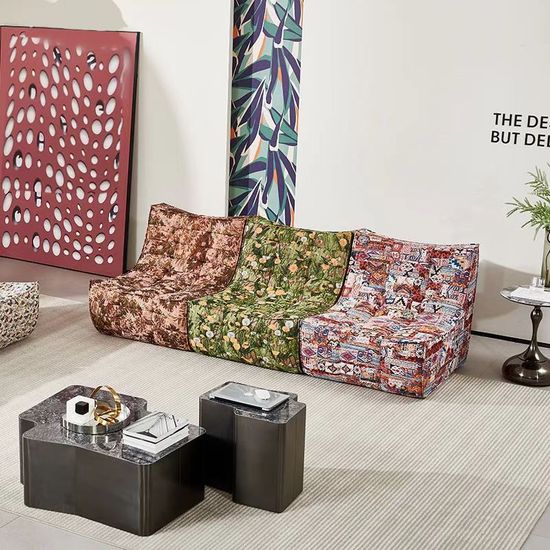


A premium Caterpillar sofa must prioritize multi-density all-foam construction. Unlike traditional sofas, it lacks a wood or metal frame, so the quality of the foam determines its longevity. Ensure the supplier uses high-resilience (HR) foam with a density of at least 35-45kg/m³ to prevent sagging. For the upholstery, breathable microfiber leather, genuine suede, or high-grammage corduroy are preferred for their durability and tactile comfort.
The 'Caterpillar' design relies on ergonomic curvature to support the lumbar spine. You should ask the supplier for the internal structure diagram to confirm it uses layered foam densities (firmer at the base, softer on top). Request a sit-test video or a third-party inspection report that focuses on pressure distribution and the 'rebound' speed of the foam after use.
For the US market, ensure the foam meets CAL 117 (TB117-2013) fire retardancy standards. For the UK, BS 5852 compliance is mandatory. Additionally, verify that the fabrics are OEKO-TEX Standard 100 certified to ensure they are free from harmful chemicals, and check for REACH compliance if exporting to the EU.
Caterpillar sofas are bulky and cannot be disassembled. To optimize costs, inquire if the supplier offers vacuum compression packaging. This can reduce the shipping volume by up to 60-70%, significantly lowering sea freight costs. However, ensure the foam is of high enough quality to fully recover its shape within 24-48 hours after unpacking.
Always request a pre-shipment inspection (PSI). Use a third-party service to verify the foam density via weight-volume calculation and check for 'hollow' spots in the structure. On platforms like Made-in-China.com, prioritize Audited Suppliers who provide full factory walkthroughs and material laboratory reports.
Focus on the Total Landed Cost. Negotiate for tiered pricing based on container loads (e.g., 20GP vs. 40HQ). Ask for a 2-5% spare parts allowance (extra fabric covers or cleaning kits) instead of a direct price discount, as this adds more value to your after-sales service without hurting the supplier's margins.
Utilize Secured Trading Services provided by Made-in-China.com to ensure your payment is only released upon proof of shipment. Use Letter of Credit (L/C) for very large orders or Telegraphic Transfer (T/T) with a 30% deposit and 70% balance against the Bill of Lading (B/L) to maintain financial leverage.
For B2B buyers, FCL (Full Container Load) is the most cost-effective and safest method to prevent crushing. If you are a smaller retailer, use LCL (Less than Container Load) but insist on wooden crate reinforcement or 'honeycomb' cardboard edge protectors to prevent the foam from being compressed unevenly by other cargo during transit.