
Satisfies 1 requirement
40FT Skeleton Semi-Trailer Trailer Chassis Frame 20FT Shipping Container Transport Chassis Trailer 40FT Truck Semi Trailers
US$5,900.00-7,880.00
1 Piece(MOQ)

I have found results from100000+products and50000+suppliers aboutContainer chassis semi trailer


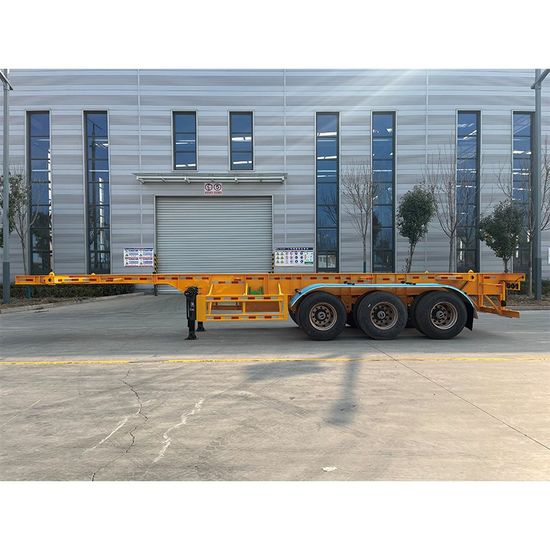


When evaluating a container chassis, focus on the main beam structure, which should ideally be made of high-strength Q345B or T700 steel to ensure load-bearing capacity and durability. Pay close attention to the axle brand and capacity (e.g., BPW or FUWA 13-16 ton axles) as they dictate the trailer's lifespan. Additionally, verify the twist lock quality; high-quality forged steel locks are essential for securing containers safely during transit.
Buyers must ensure the manufacturer holds ISO 9001 certification and that the specific model has CCC (China Compulsory Certification). For international markets, check for DOT (Department of Transportation) compliance for the US or ADR/CE standards for Europe. It is critical to request welding inspection reports and ensure the chassis has undergone shot blasting and zinc-rich epoxy painting to prevent corrosion in maritime environments.
The configuration depends on your cargo needs: 20ft, 40ft, or 45ft fixed chassis are standard, but extendable (telescopic) chassis offer maximum versatility for varying container sizes. For heavy-duty port operations, a terminal bomb cart design is preferred, while gooseneck chassis are better for lowering the center of gravity and improving stability during high-speed highway transport.
Calculate the Total Cost of Ownership (TCO) by factoring in the initial price, shipping costs (40HQ container vs. Break Bulk), and maintenance. Choosing premium tires (e.g., Triangle or Linglong) and maintenance-free wheel ends can reduce long-term operational costs. On Made-in-China.com, you can compare factory-direct prices which typically offer a 15-25% cost advantage over local distributors.
Focus on bulk order discounts; ordering in sets of 2 or 3 often allows for 'stacking' shipping, which significantly reduces freight costs per unit. Negotiate for spare parts packages (e.g., extra brake pads, lights, and air bags) to be included in the final price. Always verify the factory's production capacity on Made-in-China.com to ensure they can meet your delivery timeline.
Utilize secured payment terms and consider hiring a third-party inspection agency (like SGS or BV) to conduct a pre-shipment inspection. This ensures the steel thickness, axle specifications, and paint quality match the contract. Never transfer full payment upfront; a standard 30% deposit and 70% balance against the Bill of Lading (B/L) is the industry norm for reputable suppliers.
Trailers are usually shipped via RORO (Roll-on/Roll-off) or Bulk Cargo ships to prevent damage. For cost-saving, many suppliers offer SKD (Semi-Knocked Down) kits that fit into standard containers, but you must ensure you have the local technical capability to re-assemble and weld the components. Confirm the Incoterms (FOB vs CIF) clearly to understand who bears the risk during the sea voyage.