
Satisfies 1 requirement
API Standard Drilling Mud Pump Power End Parts Pinion Shaft
US$4,500.00-5,600.00
5 Pieces(MOQ)

I have found results from50000+products and20000+suppliers aboutPinion shafts
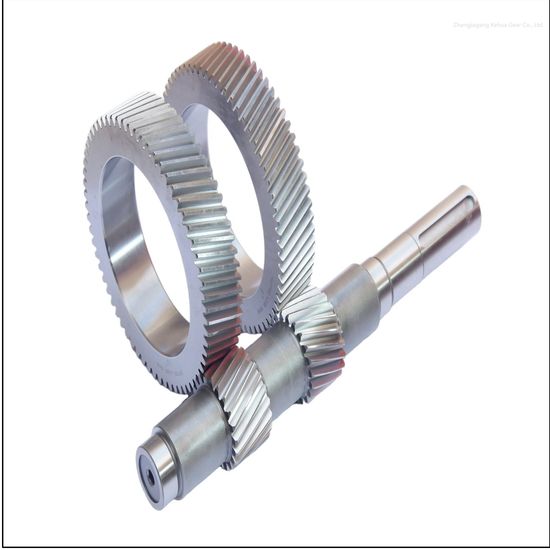


Pinion shafts are critical transmission components, so you must prioritize high-strength alloy steels such as 20CrMnTi, 40Cr, or 42CrMo. Ensure the supplier provides details on heat treatment processes, specifically carburizing and quenching, to achieve a surface hardness of HRC 58-62 while maintaining a tough core. For precision, verify that the gear accuracy grade meets ISO 1328 or DIN 3962 Class 6 or 7 standards, and check that surface roughness (Ra) is below 0.8μm to reduce friction and noise.
Request a Material Mill Certificate and Third-Party Inspection Reports (such as SGS or TUV). Key tests should include Ultrasonic Flaw Detection to check for internal cracks, Coordinate Measuring Machine (CMM) reports for dimensional accuracy, and Salt Spray Testing if the shafts will be used in corrosive environments. For high-load applications, ask for fatigue life test data to ensure the shaft can withstand long-term torque requirements without failure.
The manufacturing facility should be ISO 9001:2015 certified at a minimum. For automotive applications, look for IATF 16949 certification. Ensure the products comply with RoHS and REACH standards regarding hazardous substances. If the pinion shafts are intended for specific machinery, they may need to align with AGMA (American Gear Manufacturers Association) or JIS (Japanese Industrial Standards) to ensure technical compatibility with existing gearboxes.
Pinion shafts are widely used in automotive differentials, industrial gearboxes, construction machinery, and wind turbines. For high-speed applications, focus on dynamic balancing to prevent vibration. For heavy-duty machinery, prioritize tooth root strength and impact resistance. Always provide the supplier with your torque curves and RPM requirements to ensure the spline and gear design are optimized for your specific use case.
Implement a staged inspection strategy. Start with a pre-production sample for laboratory testing. Before final shipment, hire a professional inspector to conduct a Random Sampling Inspection (AQL 1.0 or 2.5) focusing on hardness, thread/spline fit, and coating thickness. Using Made-in-China.com's Secured Trading services can provide an extra layer of protection by ensuring payment is only released upon confirmation of quality.
Focus on Total Cost of Ownership (TCO) rather than just the unit price. Negotiate based on volume tiers; for example, a 15-20% price reduction is often possible when moving from 100 to 1,000 units. Discuss tooling costs upfront—clarify who owns the molds/dies for custom designs. Request long-term price stability agreements to protect against fluctuations in raw steel prices.
Pinion shafts are prone to rust and physical impact damage during sea freight. Insist on VCI (Volatile Corrosion Inhibitor) paper wrapping or anti-rust oil coating. Products should be packed in customized wooden crates with internal dividers to prevent shafts from hitting each other. For shipping to the US or Europe, ensure all wooden packaging is ISPM 15 compliant (heat-treated/fumigated) to avoid customs delays.
Verify the HS Code (typically 8483.10 for transmission shafts) to calculate accurate import duties in your country. Stay informed about Anti-Dumping Duties (ADD) that may apply to steel products from certain regions. Work with a freight forwarder experienced in DDP (Delivered Duty Paid) or CIF (Cost, Insurance, and Freight) terms to streamline the customs clearance process and manage unexpected costs.