
Satisfies 1 requirement
Japan 40FT Skeleton Semi Trailer Container Chassis Truck Trailer for Container Transportation
US$8,000.00-14,000.00
1 Unit(MOQ)

I have found results from60000+products and20000+suppliers aboutSkeleton container semi trailer


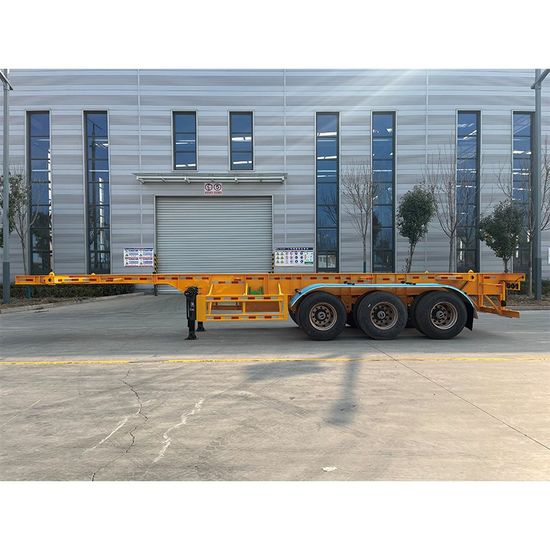


Selecting the correct trailer depends primarily on the container sizes you intend to transport. For standard logistics, a 40ft skeleton trailer is the most versatile as it can carry one 40ft container or two 20ft containers. If you specialize in heavy-duty 20ft loads, a dedicated 20ft chassis offers better weight distribution. Ensure the trailer is equipped with high-quality twist locks (usually 4, 8, or 12 units) that meet ISO standards to guarantee secure fastening during transit.
Focus on the Main Beam material, which should ideally be Q345B high-tensile steel produced via submerged arc welding for maximum structural integrity. Check the axle brand and capacity; industry leaders like FUWA or BPW (13-16 tons) are preferred for long-haul reliability. Additionally, verify the suspension system type—mechanical leaf springs are cost-effective for rough roads, while air suspension is better for protecting fragile cargo and reducing tire wear.
International buyers must ensure the manufacturer provides World Manufacturer Identifier (WMI) and Vehicle Identification Number (VIN) documentation. For specific markets, look for DOT (USA), ADR (Australia), or CE (Europe) certifications. Safety features such as ABS (Anti-lock Braking System), reflective contour marking, and underrun protection devices are mandatory in most jurisdictions to pass local road inspections.
Since these trailers often operate in humid port environments, the coating process is critical. Prioritize suppliers using sandblasting pretreatment followed by electrophoretic painting (E-coat) or polyurethane topcoats. This ensures a high salt spray resistance, preventing rust and extending the service life of the chassis to over 10 years even in coastal regions.
To optimize freight, consider Bulk Cargo ships or Ro-Ro (Roll-on/Roll-off) vessels, which are safest for fully assembled units. For cost-saving, many buyers use SKD (Semi-Knocked Down) shipping in 40HQ containers, where the rear section or axles are disassembled to fit. On Made-in-China.com, you can find suppliers experienced in stacking 2 or 3 trailers together using specialized lifting frames to significantly lower the per-unit shipping cost.
Utilize Trade Assurance services provided by Made-in-China.com to protect your payment until delivery. It is highly recommended to hire a third-party inspection agency (like SGS or BV) to conduct a Pre-Shipment Inspection (PSI). This inspection should cover weld X-ray testing, load-bearing tests, and dimension verification against the technical drawing to ensure the product matches your specifications before it leaves the factory.
Avoid vague specifications; clearly define the brand of critical components (tires, axles, braking valves) in the contract to prevent 'brand swapping.' Ensure the Incoterms (e.g., FOB, CIF, or DAP) are explicitly stated to define who bears the risk during maritime transit. Also, confirm the warranty scope, specifically requesting a 12-month warranty on the main beam and axles and the availability of wear-and-tear spare parts (like brake linings and air bags) in the initial shipment.