

Tiny cabin
I have found results from50000+products and10000+suppliers aboutTiny cabin
Commonly Used:
US$
—
Customization Available
Sample Available
Manufacturer First
Product Attributes:
Type: Row Villa
Type: Two Bedroom
Architecture: Modern Style
Certificate: CE
Material: Steel Structure
Standard: GB
Certification: CE
Customized Or Not: Customized
Application: Apartment
Fast Installation: Fast Installation
Feature: Earthquake Resistant
Style: Modern
10-19 Square Meters
Installation: Freestanding
Interior Design: Minimalist
Lighting: LED Lights
Privacy Level: Open Design
Size: Small
Usage: Office
Ventilation: Silent Fan
Design Style: Modern
Certificate: ISO
Certificate: UL
Material: Container
Material: Sandwich Panel
Material: Soundproof Fabric
Certification: ANS
Certification: ASME
Certification: CSA
Certification: ISO9001
Certification: NFPA
Certification: UL
Application: Hotel
Application: Residential Hostel
Application: Villa
Fast Installation: Standard Installation
Feature: Easily Movable
Feature: Eco-Friendliness
Feature: Flexibly Combinable
Feature: Leak Proof
Feature: Moisture Proof
Feature: Safe
Feature: Thermal Insulation
Feature: Waterproof
Feature: Wind Resistance
Interior Design: Modern

Satisfies 1 requirement
Portable Tiny Home Prefab a Frame Cabin for Vacation Resort Hotel
US$326.92
48 Square Feet(MOQ)

Satisfies 1 requirement
Fully Furnished Steel Apple Cabin Prefab Smart Tiny Space Capsule Building for Home Office & Workshop
US$299.00-550.00
1 Piece(MOQ)

Satisfies 1 requirement
Modern Custom Prefab Apple Cabin Modular Tiny House
US$2,000.00-6,000.00
1 Piece(MOQ)

Satisfies 1 requirement
Cozy Tiny House Apple Cabin for Memorable Outdoor Experiences
US$7,650.00-8,090.00
1 Set(MOQ)

Satisfies 1 requirement
Faster Operation Commercial Complex Indoor Outdoor Cafe Use Portable Cabin Tiny Prefab Cabin Home
US$3,599.00-9,999.00
1 Piece(MOQ)

Satisfies 1 requirement
Econelbuilding Corrosion Resistant Weatherproof Fully Equipped Steel Glass Prefabricated Modular Tiny Home Capsule House Apple Cabin
US$3,599.00-9,999.00
1 Piece(MOQ)

Satisfies 1 requirement
40FT Outdoor Extendable Modern Prefab House Tiny House Mobile Working House Office Hotel Pod Apple Cabin Container Home
US$4,500.00
1 Piece(MOQ)

Satisfies 1 requirement
2026 Hot Sale Sound Proof New Style Tiny Space High Strength Modular Prefabricated Mini Movable Capsule Modern Apple Cabin with CE/SGS Certification
US$2,500.00-15,000.00
1 Piece(MOQ)

Satisfies 1 requirement
Modular House Popular Cabin Office Tiny House Mobile Apple Cabin on Wheels
US$3,800.00-3,900.00
1 sets(MOQ)

Satisfies 1 requirement
40FT Folding Expandable Luxury Tiny Modular Home Resort Office Apple Cabin
US$4,500.00-6,800.00
1 Set(MOQ)

Satisfies 1 requirement
Portable House Prefabricated Living Tiny Container Prefab Home Bathroom Bedroom Office Cabin
US$3,376.00-3,597.00
3 Sets(MOQ)


Satisfies 1 requirement
Modern Boutique Tiny House: Stylish Smart Mobile Apple Cabin
US$200.00-280.00
15 Square Meters(MOQ)

Satisfies 1 requirement
Premium Apple Pod Cabin Luxury Modular Tiny House Prefabricated Portable Home for Resort Hotel Tourism Project and Airbnb Business
US$4,000.00-8,000.00
1 Piece(MOQ)

Satisfies 1 requirement
2026 Hot Sale Sound Proof New Style Tiny Space High Strength Modern Apple Cabin
US$5,000.00-20,000.00
1 units(MOQ)

Satisfies 1 requirement
Modular Prefabricated Tiny Connector Space Capsule Container Cabin for Holiday Rental Project
US$21,800.00
1 Piece(MOQ)

Satisfies 1 requirement
Modern Design Mobile Container House Tiny Working House Office Pod Apple Cabin
US$5,200.00-7,250.00
1 Piece(MOQ)

Satisfies 1 requirement
27m² Tiny Modular Prefabricated Movable Capsule Modern Apple Cabin
US$13,500.00
1 Set(MOQ)

Satisfies 1 requirement
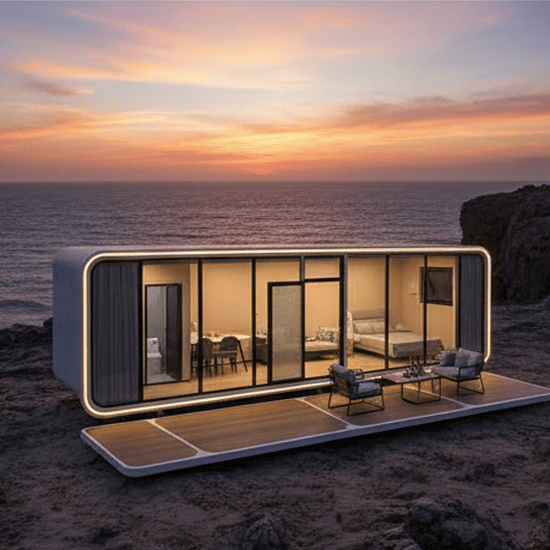
Apple Cabin Container House Prefab Tiny Home off-Grid Apple Cabin Energy-Saving for Remote Countryside Self Sufficient Homestays
US$5,600.00-12,800.00
1 Set(MOQ)
Satisfies 1 requirement
Modular House Prefab Tiny Mobile Space Capsule Home House Modern Prefabracated Container Building Container Apple Capsule Cabin Homestay Factory Price
US$5,500.00-6,000.00
1 Piece(MOQ)

Satisfies 1 requirement
Modular Home Apple Cabin Mobile Prefabricada Tiny House Modern Prefab Home
US$5,416.00-6,377.00
1 Piece(MOQ)

Satisfies 1 requirement
Versatile 20FT and 40FT Modular Tiny Cabin Options
US$3,850.00-3,900.00
1 Set(MOQ)

Satisfies 1 requirement
Tiny Silent Soundproof Cabin for Meeting Recording Studio
US$2,480.00
1 Piece(MOQ)

Satisfies 1 requirement
Contemporary Mobile Cabin Built for Flexibility and Modern Elegance Tiny Home
US$980.00-1,280.00
4 Pieces(MOQ)

Satisfies 1 requirement
Homestay Resort Eco-Friendly Tiny Home Apple Cabin
US$4,200.00-5,300.00
1 Piece(MOQ)

Satisfies 1 requirement
Panoramic Glass Window Portable Mobile Tiny Home Apple Cabin for Shop
US$399.00-20,000.00
1 Ton(MOQ)

Satisfies 1 requirement
Modular Prefab Tiny Mobile Space Capsule Home House Modern Prefabracated Container Apple Cabin
US$7,050.00-13,200.00
1 Piece(MOQ)

Satisfies 1 requirement
Modern Modular Space Capsule Pod Price for Gym Luxurious Mobile Villas Apple Tiny Home Prefabricated Steel Structure Cabin with 2 Bathroom Prefab House Cabin
US$15,000.00-26,000.00
1 Piece(MOQ)

Satisfies 1 requirement
Factory Price Modular House Prefab Tiny Mobile Space Capsule Home House Modern Container Building Container Apple Capsule Cabin
US$300.00-450.00
14 Square Meters(MOQ)
Sourcing guidance for Tiny Cabin
What are the key technical specifications to consider when selecting a Tiny Cabin?
When sourcing tiny cabins, prioritize structural integrity and material durability. Ensure the frame uses galvanized steel or high-grade aluminum to prevent corrosion. For insulation, look for polyurethane (PU) or rock wool sandwich panels with a thickness of at least 50mm-100mm to ensure thermal efficiency. Additionally, verify that the flooring is waterproof and fire-resistant, typically using fiber cement boards or SPC flooring.
How do I ensure the Tiny Cabin meets international compliance and safety standards?
Compliance is critical for cross-border procurement. You must confirm the supplier adheres to ISO 9001 for quality management and CE or UL certification for electrical systems (wiring, sockets, and breakers). For the US market, ensure materials meet ASTM fire safety standards, and for the EU, check for REACH compliance regarding chemical substances in paints and adhesives.
What functional features are essential for different usage scenarios?
For residential or Airbnb use, prioritize integrated plumbing and electrical systems (plug-and-play) and aesthetic finishes. For office or studio use, focus on soundproofing and high-speed data port integration. If the cabin is intended for remote or off-grid locations, inquire about solar power compatibility and rainwater harvesting system readiness.
How can I evaluate the economic feasibility and total cost of ownership?
Beyond the unit price, calculate the Total Cost of Ownership (TCO) by including ocean freight, import duties, and local crane/installation fees. Opt for flat-pack or foldable designs to significantly reduce shipping costs, as they allow more units per 40HQ container. Always factor in a 5-10% contingency budget for site preparation and foundation work.
Cross-Border Purchasing Considerations for Tiny Cabins
What are the primary risks in cross-border purchasing of Tiny Cabins?
The biggest risks include structural damage during transit and non-compliance with local building codes. To mitigate this, use Made-in-China.com's secured payment services and hire a third-party inspection agency (like SGS or Intertek) to conduct a pre-shipment inspection focusing on weld quality and waterproofing.
How should I negotiate with suppliers for bulk orders?
Negotiate based on volume tiers and customization requirements. Request a 15-25% discount for orders exceeding 5 units. Instead of just pushing for the lowest price, negotiate for extended warranties (3-5 years on structure) or the inclusion of premium interior fixtures at no extra cost to increase your resale value.
What are the logistics and shipping precautions for such large items?
Tiny cabins are oversized cargo. Ensure the supplier uses professional sea-worthy packaging, such as steel frames or heavy-duty plastic wrapping. Clarify the Incoterms (FOB vs. DDP); for beginners, CIF or DDP is often safer as the supplier handles the complex logistics. Ensure the destination port has the necessary lifting equipment to handle 2-5 ton units.
How do I verify the reliability of a supplier on Made-in-China.com?
Look for 'Audited Suppliers' on Made-in-China.com who have undergone on-site factory inspections. Check their export history to your specific country to ensure they understand your local voltage (e.g., 110V vs 220V) and plumbing standards. Review their production capacity to ensure they can meet your delivery timelines without compromising quality.