
Satisfies 1 requirement
Wooden Exterior Sliding Balcony Turkey Steel Security Patio Door
US$40.00-150.00
30 Pieces(MOQ)

I have found results from20000+products and7000+suppliers aboutTurkey steel door


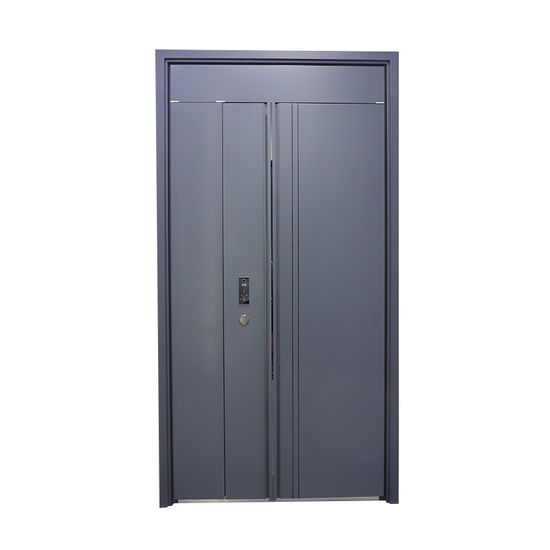
When evaluating Turkey Steel Doors, focus on the steel sheet thickness, which should ideally be 1.2mm to 2.0mm for the frame and 0.8mm to 1.0mm for the door leaf to ensure structural integrity. The infilling material is critical for performance; rock wool or honeycomb paper are common, but rock wool offers superior fire resistance and sound insulation. Additionally, verify the locking system, preferably multi-point security locks from reputable brands like KALE, which are a hallmark of Turkish door quality.
Buyers must ensure products meet ISO 9001 for quality management. For specific markets, look for CE Marking (Europe) or UL certification (North America) if fire rating is required. Ensure the doors comply with EN 14351-1, the European standard for windows and external pedestrian doorsets, which covers air permeability, watertightness, and wind resistance.
For outdoor installations exposed to sunlight and rain, prioritize UV-resistant powder coating or heat-transfer printing with a protective lacquer to prevent fading and rusting. For indoor or apartment entries, PVC film coating or natural wood veneer provides a more aesthetic, premium finish. Always confirm the anti-corrosion grade if the doors are intended for coastal regions with high salinity.
Turkey Steel Doors are renowned for their monoblock or hook locking systems and adjustable door frames, which can accommodate varying wall thicknesses (typically 15cm to 25cm). This flexibility reduces installation errors and after-sales complaints. Furthermore, the inclusion of stainless steel thresholds and hidden hinges enhances both security and the modern aesthetic demanded by high-end real estate projects.
Always request a pre-shipment inspection (PSI) by a third-party agency like SGS or Intertek. Specifically, instruct them to measure leaf thickness with a micrometer and verify the weight of the door, as weight is a primary indicator of steel density and internal reinforcement. Utilize Made-in-China.com's Secured Trading services to ensure payment is only released upon confirmation of shipping documents.
Negotiate based on Total Cost of Ownership (TCO) rather than just the unit price. Ask for spare parts (1-2%) such as handles, locks, and rubber seals to be included in the bulk order to handle potential transit damage. For large projects, negotiate a staggered payment schedule (e.g., 30% deposit, 70% against BL copy) to maintain leverage over production timelines.
Steel doors are prone to corner damage and surface scratches. Insist on reinforced cardboard packaging with foam corner protectors and PE film wrapping. For FCL (Full Container Load) shipments, ensure the supplier uses wooden pallets or frames to prevent shifting. Verify the loading capacity of a 40HQ container, which typically holds 120 to 150 sets depending on whether the frames are knocked-down (KD) or welded.
Check for anti-dumping duties on steel products in your specific country. Ensure the supplier provides a correct HS Code (typically 730830) to avoid customs delays. Request a Certificate of Origin to take advantage of any bilateral trade agreements that might reduce import tariffs.