SourcingAI

Ball joint forging manufacturers

I have found results from1000+products and500+suppliers aboutBall joint forging

Ningbo Winson Machinery Products Co., Ltdmic-icon
Satisfies 2/2 of your requirements
Black Zinc-Nickel Alloy Electroplated Metal Ball Joints for Bonnet Gas Struts

Black Zinc-Nickel Alloy Electroplated Metal Ball Joints for Bonnet Gas Struts

US$0.15-1.00
1,000 Pieces(MOQ)
Sample Available
Form a/as, B/BS, C/CS Axial Ball Joints, Angled & Straight Rod Connection Types

Form a/as, B/BS, C/CS Axial Ball Joints, Angled & Straight Rod Connection Types

US$0.15-1.00
1,000 Pieces(MOQ)
Sample Available
SS304, SS316 Stainless Steel Ball Joints DIN 71802 for Damper Ends

SS304, SS316 Stainless Steel Ball Joints DIN 71802 for Damper Ends

US$0.15-1.00
1,000 Pieces(MOQ)
Sample Available
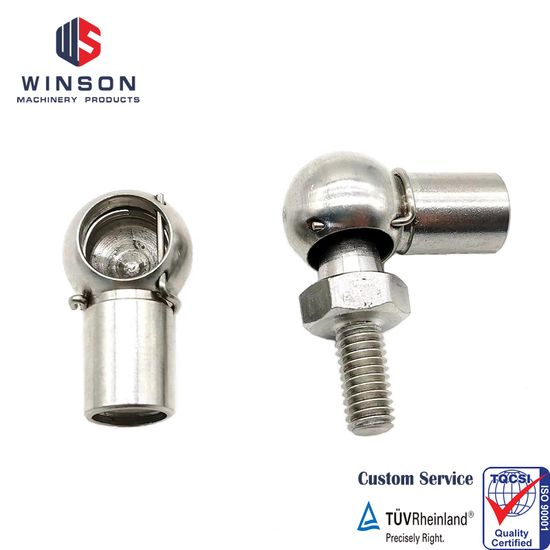
Tie Rod End Stainless Steel Angled Ball Socket Joints, SS304 & SS316

Tie Rod End Stainless Steel Angled Ball Socket Joints, SS304 & SS316

US$0.15-1.00
1,000 Pieces(MOQ)
Sample Available
DIN71802 Threaded Ball Joint Linkage for Car Hood & Machines

DIN71802 Threaded Ball Joint Linkage for Car Hood & Machines

US$0.15-1.00
1,000 Pieces(MOQ)
Sample Available
DIN71802 Angled Ball Joints Tight Fitting Meet to Germany Standards

DIN71802 Angled Ball Joints Tight Fitting Meet to Germany Standards

US$0.15-1.00
1,000 Pieces(MOQ)
Sample Available
Lowest Price Ball Socket Joints for Car Hood Support Rod

Lowest Price Ball Socket Joints for Car Hood Support Rod

US$0.15-1.00
1,000 Pieces(MOQ)
Sample Available
Metal Ball Joints for Gas Struts Rod Ends

Metal Ball Joints for Gas Struts Rod Ends

US$0.15-1.00
1,000 Pieces(MOQ)
Sample Available
Angle Ball Joint, Ball Socket Joint for Piston Rod Ends

Angle Ball Joint, Ball Socket Joint for Piston Rod Ends

US$0.10-5.00
1,000 Pieces(MOQ)
Sample Available
Competitive Price Tie Rod End Connecting Ball Head Joints for Gas Lifts

Competitive Price Tie Rod End Connecting Ball Head Joints for Gas Lifts

US$0.15-1.00
1,000 Pieces(MOQ)
Sample Available
Lowest Factory Price DIN71802 Angled Ball Joints

Lowest Factory Price DIN71802 Angled Ball Joints

US$0.15-1.00
1,000 Pieces(MOQ)
Sample Available
DIN71802, DIN71803, DIN71805 Rod End Ball Joints, Ball Sockets, Ball Studs, Ball Seats.

DIN71802, DIN71803, DIN71805 Rod End Ball Joints, Ball Sockets, Ball Studs, Ball Seats.

US$0.10-5.00
1,000 Pieces(MOQ)
Sample Available
Bus Outer Swing Door Lower Pull Rod Connection Ball Joints

Bus Outer Swing Door Lower Pull Rod Connection Ball Joints

US$0.15-1.00
1,000 Pieces(MOQ)
Sample Available
Quick Release Ball Joints End Fittings for Lawn Mower & Marine Throttle Line

Quick Release Ball Joints End Fittings for Lawn Mower & Marine Throttle Line

US$0.15-1.00
1,000 Pieces(MOQ)
Sample Available
Rod End Bearings Use Metal Ball Socket Joints

Rod End Bearings Use Metal Ball Socket Joints

US$0.15-1.00
1,000 Pieces(MOQ)
Sample Available
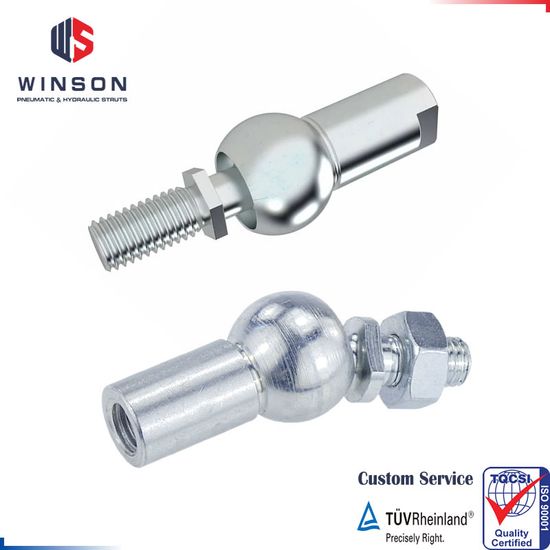
DIN71802 Straight Rod Connection Axial Ball Joints

DIN71802 Straight Rod Connection Axial Ball Joints

US$0.15-1.00
1,000 Pieces(MOQ)
Sample Available
Tie Rod Ball Joint Steering Ends

Tie Rod Ball Joint Steering Ends

US$0.15-1.00
1,000 Pieces(MOQ)
Sample Available
Top Link Ball Ends, Rod Eye End Joints

Top Link Ball Ends, Rod Eye End Joints

US$0.15-1.00
1,000 Pieces(MOQ)
Sample Available
Tie Rod End Ball Head Joints, Universal Joints

Tie Rod End Ball Head Joints, Universal Joints

US$0.15-1.00
1,000 Pieces(MOQ)
Sample Available

Sourcing guidance for Ball Joint Forging

What are the key material specifications to consider when sourcing forged ball joints?

For high-stress automotive or industrial applications, you should prioritize AISI 4140 (42CrMo) or AISI 1045 (45# steel). Ensure the supplier provides a Material Mill Certificate to verify chemical composition. The forging process must achieve a fine-grained structure to enhance fatigue resistance, and the final product should undergo quenching and tempering to reach a hardness level typically between 26-32 HRC, depending on the specific load requirements.

Which manufacturing standards and quality certifications are mandatory for this category?

Since ball joints are critical safety components, the supplier must be certified under IATF 16949:2016, which is the global quality management standard for the automotive industry. Additionally, verify that the products meet ISO 9001 for general manufacturing and check for compliance with SAE J490 or SAE J491 standards, which govern the performance and dimensions of ball joints.

How can I evaluate the technical performance and durability of a forged ball joint?

Request detailed test reports covering Tensile Strength, Yield Strength, and Impact Toughness. For the ball stud itself, Surface Roughness (Ra) should be less than 0.4μm to minimize friction and wear on the socket. Furthermore, ask for Salt Spray Test (ASTM B117) results—ideally exceeding 72 to 96 hours—to ensure the surface treatment (such as zinc plating or electrophoresis) can withstand corrosive environments.

What are the advantages of hot forging versus cold forging for ball joints?

Hot forging is generally preferred for complex ball joint geometries as it allows for better material flow and eliminates internal voids, making it ideal for heavy-duty trucks or construction machinery. Cold forging may be used for smaller, high-precision components to achieve better surface finishes and tighter dimensional tolerances without the need for extensive secondary machining.

Cross-Border Procurement & Risk Management for Forged Components

How can I mitigate the risk of receiving sub-par quality in bulk orders?

Always implement a Pre-Shipment Inspection (PSI) by a third-party agency (like SGS or TUV). Specifically, request Non-Destructive Testing (NDT), such as Magnetic Particle Inspection (MPI) or Ultrasonic Testing, to detect internal cracks or surface flaws that are invisible to the naked eye. Using Made-in-China.com's Secured Trading services can also provide a layer of financial protection until the quality is verified.
What strategies should be used when negotiating with Chinese forging factories?

Focus on Total Cost of Ownership (TCO) rather than just the unit price. Negotiate based on raw material price indexing (linking the price to the current market rate of steel) to ensure fairness during market fluctuations. Additionally, clarify molding/tooling ownership; ensure the contract states that the buyer owns the dies after a certain production volume or a one-time payment.

What are the logistics and packaging precautions for heavy forged parts?

Forged ball joints are heavy and prone to oxidation during sea transit. Insist on VCI (Volatile Corrosion Inhibitor) bags or anti-rust oil coating for each piece. For shipping, use reinforced wooden crates (IPPC certified) rather than standard pallets to prevent shifting. Ensure the Gross Weight per container is strictly monitored to comply with the destination country's road weight limits.

How do I ensure compliance with international trade policies and tariffs?

Verify the HS Code (typically 8708.99 for automotive parts or 7326.19 for general forgings) to calculate accurate import duties. Be aware of Anti-Dumping Duties that may apply to specific steel products in regions like the EU or USA. Work with a professional customs broker to ensure all Certificates of Origin are correctly filed to leverage any existing Free Trade Agreements (FTAs).

Related queries