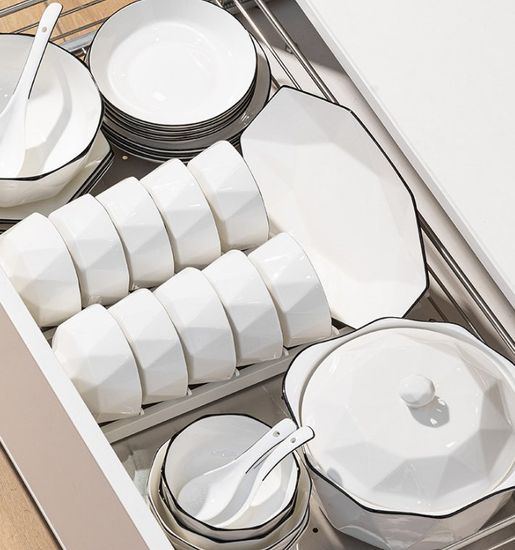
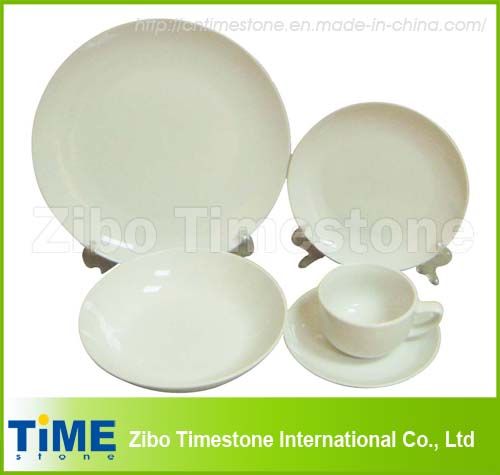
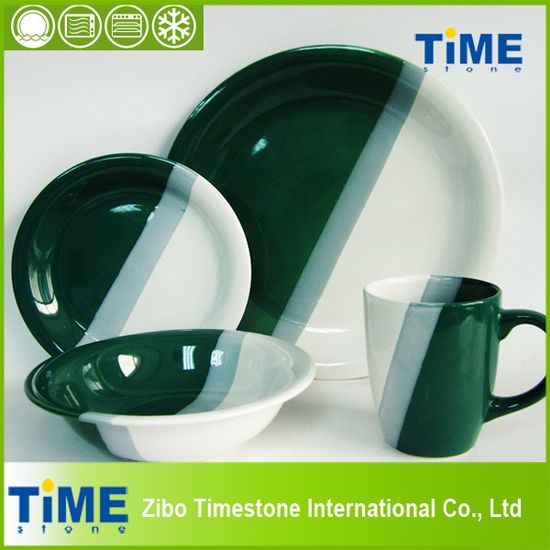
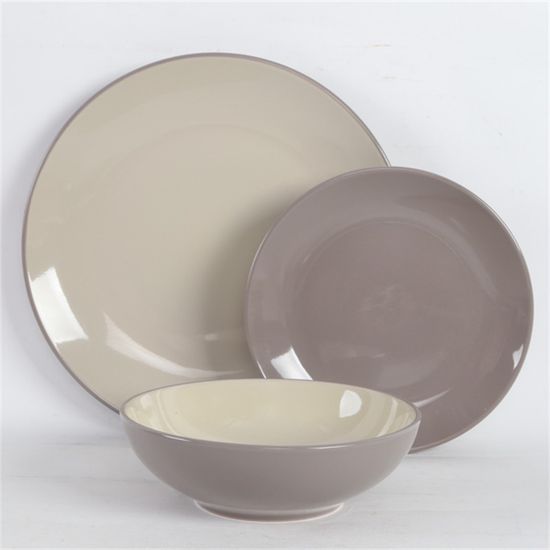
Light Brown Smooth Ceramic Bowl and Plate Three-Piece Set Can Be Customized

Dark Grey Smooth Ceramic Bowl and Tray Set Can Be Customized

Cream Green Smooth Ceramic Bowl and Tray Set Can Be Customized

I have found results from400+products and200+suppliers aboutCeramic crockery


Understanding material composition is vital for market positioning. Bone China contains bovine bone ash, making it the most translucent, lightweight, and durable option, ideal for high-end retail. Porcelain is fired at high temperatures, offering excellent strength and low porosity, suitable for general household use. Stoneware is thicker and more opaque with a rustic finish, providing superior heat retention but is more prone to chipping compared to porcelain.
Compliance is non-negotiable due to food contact risks. Products must pass Lead and Cadmium leaching tests (e.g., FDA 7117.06/07 for the US or EU Directive 84/500/EEC). Ensure the supplier provides Food Grade Certificates and complies with ISO 6486-1 standards. For the German market, LFGB certification is mandatory, while California Proposition 65 requires specific labeling if chemical thresholds are exceeded.
For B2B buyers in the HORECA sector, prioritize edge chip resistance and thermal shock resistance (the ability to withstand sudden temperature changes from -20°C to 200°C). Verify that the glaze is scratch-resistant against metal cutlery and that the items are certified dishwasher and microwave safe. Request a water absorption rate test report; high-quality vitrified ceramics should have an absorption rate of less than 0.5%.
Suppliers on Made-in-China.com usually offer In-glaze, On-glaze, and Under-glaze decoration methods. Under-glaze is the most durable as the design is protected by the glass layer. You can request custom molds (OEM) for unique shapes or logo decal application (ODM). Note that custom shapes will involve tooling costs and longer lead times, typically 30-45 days for initial sampling.
Ceramics are fragile, so packaging is the most critical factor. Insist on 5-layer corrugated export cartons and individual bubble wrapping or molded pulp inserts. For bulk shipments, require palletization with plastic film wrapping and corner protectors. It is highly recommended to include a Drop Test (ISTA 1A or 2A) requirement in your contract to ensure the packaging can withstand rough handling.
Focus on Total Landed Cost rather than just the unit price. Negotiate based on volume tiers; increasing an order from 500 to 2,000 pieces can often reduce costs by 15-25%. Discuss payment terms such as a 30% deposit and 70% balance against the Bill of Lading (B/L). Always request a pre-production sample and a Gold Sample to be kept as a quality benchmark for the final inspection.
Utilize Secured Trading Services provided by Made-in-China.com to protect your payment. Hire a third-party inspection agency (like SGS or Intertek) to perform a Final Random Inspection (FRI). The inspector should check for pinholes, black spots, uneven glazing, and bottom smoothness (to prevent scratching tables). Never release the final payment until you receive a passed inspection report.
Be aware that some regions, particularly the EU, have historically applied Anti-Dumping Duties on ceramic tableware originating from certain countries. Check your local customs tariff code (HS Code 6911.10) for current rates. For shipping, Sea Freight (FCL or LCL) is the most economical method for ceramics due to their weight. Ensure your forwarder provides Marine Insurance covering 'All Risks' to protect against breakage or loss at sea.