SourcingAI

Glass insulators price manufacturers

I have found results from2000+products and900+suppliers aboutGlass insulators price

Jiangxi Minocheng Electrical Equipment Co., Ltdmic-icon
Satisfies 2/2 of your requirements
U70blp Electric Suspension Glass Insulator High Voltage Glass Pin and Cap Insulator

U70blp Electric Suspension Glass Insulator High Voltage Glass Pin and Cap Insulator

US$4.00-6.00
300 Pieces(MOQ)
Sample Available
U70b/U70bl High-Performance Disc Toughened Glass Insulator Glass Insulator

U70b/U70bl High-Performance Disc Toughened Glass Insulator Glass Insulator

US$3.00
100 Pieces(MOQ)
Sample Available
Glass Insulator Galvanized Cap Pin Fitting Glass Toughened Glass Suspension Insulator for Energy Plant

Glass Insulator Galvanized Cap Pin Fitting Glass Toughened Glass Suspension Insulator for Energy Plant

US$4.00-5.00
200 Pieces(MOQ)
Sample Available
U120b High-Performance Disc Toughened Glass Insulator Glass Insulator

U120b High-Performance Disc Toughened Glass Insulator Glass Insulator

US$3.00
100 Pieces(MOQ)
Sample Available
Cap and Pin Glass Insulator Anti Pollution Glass Surface Glass Glass Suspension Insulator for Wind Power

Cap and Pin Glass Insulator Anti Pollution Glass Surface Glass Glass Suspension Insulator for Wind Power

US$4.00-5.00
200 Pieces(MOQ)
Sample Available
U100blp/450 100kN Anti-Pollution Glass Insulator for High Voltage Lines

U100blp/450 100kN Anti-Pollution Glass Insulator for High Voltage Lines

US$6.00
100 Pieces(MOQ)
Sample Available
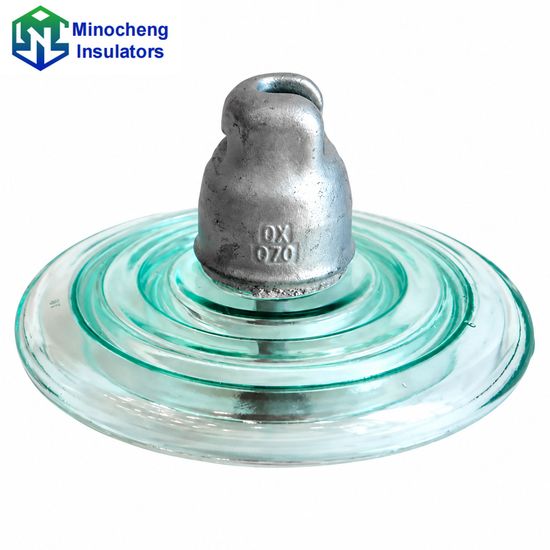
Glass Suspension Insulator with Ball Socket Connection for Power Lines

Glass Suspension Insulator with Ball Socket Connection for Power Lines

US$2.00-5.00
200 Pieces(MOQ)
Sample Available
70kN Toughened Glass Insulator for Electrical Power Distribution Networks

70kN Toughened Glass Insulator for Electrical Power Distribution Networks

US$2.00-5.00
200 Pieces(MOQ)
Sample Available
U70bp/146D 70kN Glass Suspension Insulator for Overhead Transmission Lines

U70bp/146D 70kN Glass Suspension Insulator for Overhead Transmission Lines

US$4.90-6.90
200 Pieces(MOQ)
Sample Available
Toughened Glass Insulator Anti Pollution Glass Surface Glass Glass Disc Suspension Insulator for Transmission

Toughened Glass Insulator Anti Pollution Glass Surface Glass Glass Disc Suspension Insulator for Transmission

US$2.00-5.00
200 Pieces(MOQ)
Sample Available
U70bp/146D Double Shed Toughened Glass Suspension Disc Insulator

U70bp/146D Double Shed Toughened Glass Suspension Disc Insulator

US$20.00
200 Pieces(MOQ)
Sample Available
210kN Toughened Glass Suspension Insulator for High Voltage Transmission Lines

210kN Toughened Glass Suspension Insulator for High Voltage Transmission Lines

US$11.00
500 Pieces(MOQ)
Sample Available
U70bp Glass Suspension Insulator with 16 Ball Socket Connection

U70bp Glass Suspension Insulator with 16 Ball Socket Connection

US$20.00
200 Pieces(MOQ)
Sample Available
U70bp 70kN Toughened Glass Insulator for High Voltage Power Lines

U70bp 70kN Toughened Glass Insulator for High Voltage Power Lines

US$20.00
200 Pieces(MOQ)
Sample Available
U210b High Strength Toughened Glass Insulator for Transmission Lines

U210b High Strength Toughened Glass Insulator for Transmission Lines

US$11.00
500 Pieces(MOQ)
Sample Available

Sourcing guidance for Glass Insulators Price

What technical specifications directly influence the price of glass insulators?

The price is primarily driven by the mechanical failing load (kN) and the dielectric strength. High-voltage applications requiring 70kN to 300kN or higher will command a premium. Additionally, the creepage distance (the shortest distance along the surface of the glass) is a critical cost factor; insulators designed for highly polluted areas require longer creepage distances, increasing material volume and cost. Ensure the glass is toughened (tempered) to meet IEC 60383 standards, as non-tempered glass lacks the necessary thermal and mechanical stability for power grids.

How do compliance standards and certifications affect the sourcing cost?

Products certified under IEC (International Electrotechnical Commission), ANSI (American National Standards Institute), or AS standards typically have a higher baseline price due to rigorous testing. Buyers should verify Type Test Reports from independent laboratories like KEMA or CPRI. Sourcing insulators that meet ISO 9001:2015 for manufacturing and ISO 14001 for environmental management ensures long-term reliability, which reduces the Total Cost of Ownership (TCO) by minimizing line failures and maintenance expenses.

What are the usage scenarios that dictate the choice between standard and anti-pollution glass insulators?

Standard profile glass insulators are suitable for clean or inland areas. However, for coastal regions (high salinity) or industrial zones (heavy dust/smoke), you must invest in anti-pollution (fog type) profiles. These feature deeper ribs to prevent flashovers. While the unit price for anti-pollution types is 15-25% higher, they are economically feasible as they prevent costly power outages and equipment damage in harsh environments.

How can a B2B buyer evaluate the economic feasibility of glass vs. porcelain insulators?

Glass insulators offer a unique economic advantage: 'self-shattering' visibility. When a toughened glass insulator fails, the glass shell shatters but the internal stub remains mechanically intact, allowing maintenance crews to identify faults from the ground without specialized equipment. This significantly reduces inspection costs compared to porcelain, where internal cracks are invisible. When calculating the budget, factor in the zero-maintenance nature of glass and its longer service life (up to 40-50 years).

Cross-Border Procurement Risks and Strategic Advice for Glass Insulators

What are the primary risks when shipping glass insulators internationally?

The main risk is mechanical impact and vibration during transit. Although toughened glass is strong, the galvanized steel caps and pins can cause surface scratches or 'bruising' if not packed correctly. Insist on seaworthy wooden crates with internal reinforcements or palletized packaging with plastic film wrapping. Ensure the supplier uses hot-dip galvanization (ASTM A153) on metal parts to prevent corrosion during sea freight exposure.

How should buyers negotiate pricing and terms with suppliers on Made-in-China.com?

Focus on volume-based pricing tiers. For glass insulators, raw material costs (silica sand, soda ash) and energy for the furnace are fixed; therefore, larger MOQs (e.g., 1,000+ units) significantly lower the unit price. Request FOB (Free On Board) terms to maintain control over shipping costs, and always ask for a 1% to 2% spare parts allowance for the glass shells to cover potential breakage during local inland transport.

What transaction security measures should be taken for high-value electrical component orders?

Utilize Secured Trading Services provided by Made-in-China.com to protect your payment until the goods are shipped. For large-scale infrastructure projects, implement a staged payment structure: 30% deposit, 60% upon successful third-party pre-shipment inspection (PSI), and 10% after receipt of the Bill of Lading. Never skip the factory audit; verify the supplier's kiln capacity and testing laboratory equipment via video call or a professional audit service.

What are the key international trade policy considerations for this category?

Check for Anti-Dumping Duties (ADD). Some regions (like the EU or India) have previously imposed duties on ceramic or glass insulators from specific origins. Verify the HS Code (typically 8546.10) with your local customs broker to determine the exact import tariffs and VAT. Ensure the supplier provides a Certificate of Origin (CO) to take advantage of any Free Trade Agreements (FTAs) that might reduce your duty burden.

Related queries