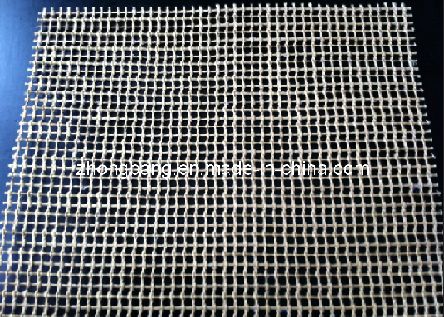
Kevlar mesh belt manufacturers
I have found results from700+products and300+suppliers aboutKevlar mesh belt
Sourcing guidance for Kevlar Mesh Belt
What are the key technical specifications to consider when selecting a Kevlar mesh belt for industrial use?
When sourcing Kevlar mesh belts, you must prioritize thermal stability and tensile strength. Ensure the belt can withstand continuous operating temperatures of up to 250°C to 300°C without degradation. The mesh size (typically ranging from 1x1mm to 4x4mm) should be selected based on the required airflow efficiency for drying or UV curing processes. Additionally, verify the PTFE coating thickness, as a high-quality coating ensures superior non-stick properties and chemical resistance.
Which compliance standards and certifications are essential for Kevlar mesh belts in food or textile processing?
For food-grade applications, the belt must comply with FDA (Food and Drug Administration) and LFGB standards to ensure no toxic substances migrate into food products. In textile or industrial sectors, look for ISO 9001:2015 certification to guarantee manufacturing consistency. Furthermore, ensure the product meets REACH and RoHS requirements if you are exporting to the European market to avoid legal complications regarding hazardous chemical substances.
How can a buyer evaluate the durability and lifespan of a Kevlar mesh belt before purchasing?
Durability is determined by the edge reinforcement and the joint type. Request suppliers to provide belts with PTFE film or heat-sealed edges to prevent fraying. For the joint, a Bullnose Joint or Alligator Lace made of stainless steel is recommended for high-tension environments. Ask for abrasion resistance test reports and the breakage strength (N/5cm) data to ensure the belt can handle your specific machine load without premature failure.
Cross-Border Procurement Strategies & Risk Management for Kevlar Mesh Belts
What are the primary risks when importing Kevlar mesh belts and how can they be mitigated?
The main risk is material substitution, where lower-grade aramid or fiberglass is used instead of genuine Kevlar. To mitigate this, use Made-in-China.com's Secured Trading services and request a third-party inspection (such as SGS or Intertek) before shipment. Another risk is dimensional inaccuracy; always provide a technical drawing with tolerances of ±1-2mm and include these specifications in the formal Proforma Invoice (PI).
How should I negotiate with suppliers to ensure cost-efficiency and quality for bulk orders?
Focus on Total Cost of Ownership (TCO) rather than just the unit price. Negotiate for tiered pricing where a 500-meter order yields a 15-20% discount compared to sample prices. Demand a quality guarantee period of at least 12 months. If sourcing via Made-in-China.com, prioritize Diamond Members or Audited Suppliers, as these entities have undergone rigorous on-site verification of their production capabilities.
What logistics and packaging precautions are necessary for international shipping of mesh belts?
Kevlar mesh belts are sensitive to creasing and folding, which can damage the internal fibers. Ensure the supplier uses heavy-duty cardboard tubes for internal support and wraps the exterior in waterproof PVC film followed by wooden crates for LCL (Less than Container Load) shipping. Clearly define Incoterms 2020 (e.g., FOB or CIF) in the contract to clarify who bears the risk during the maritime transit phase.