Flat Fabric Eagle Design Outdoor Kids Flying Kite

Colored Diamond Shape Rainbow Outdoor Children Gift Flying Kite

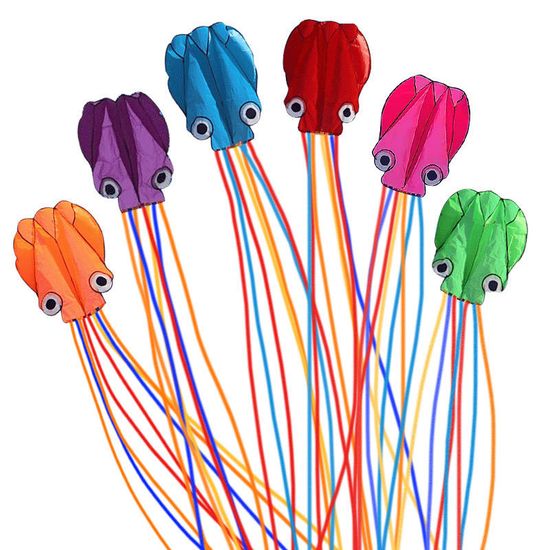
Large 3D Octopus Beach Park Outdoor Flying 3D Octopus Kite

I have found results from400+products and200+suppliers aboutKids kite


When sourcing kids' kites, prioritize Ripstop Polyester or Nylon fabrics. These materials are highly resistant to tearing and have excellent UV resistance, ensuring the kite doesn't fade or become brittle. For the frame, Fiberglass rods are the industry standard for children's kites because they are lightweight, flexible, and shatter-proof, unlike wooden or plastic alternatives which can snap and create sharp edges.
As kites are classified as toys, they must meet strict international safety standards. Ensure the supplier provides EN71 certification for the European market or ASTM F963 for the United States. Key safety checks include Physical and Mechanical Properties (no sharp points), Flammability, and Chemical Testing (ensuring the ink and fabric are free from lead and phthalates). Additionally, the kite string must be non-conductive to prevent electrical hazards.
For younger children (ages 3-6), Diamond or Delta kites are best because they are 'easy-fly' models that launch with minimal wind. For older children or beginners seeking more stability, Parafoil kites (frameless) are ideal as there are no parts to break upon crashing. If your target market is hobbyists, look for Stunt or Dual-line kites, which allow for maneuverability and tricks, though these require higher wind speeds and more coordination.
Request a flight test video from the manufacturer in various wind conditions (Light: 5-10 mph vs. Strong: 15-20 mph). Check the stitching quality, specifically looking for reinforced pockets where the rods insert, as these are common failure points. High-quality kites should include a swivel connector on the string to prevent tangling during flight.
The primary risk is material substitution, where a supplier uses cheaper, non-ripstop fabric that tears easily. To mitigate this, use third-party inspection services like those offered through Made-in-China.com to verify material density and stitching before shipment. Another risk is packaging damage; kites with long fiberglass rods are prone to bending if the outer cartons are not reinforced.
Kites are generally lightweight but can be voluminous. To reduce Dimensional Weight (DIM) charges, request flat-pack or 'foldable' packaging. Many suppliers can provide kites in compact PVC bags or fabric pouches, which significantly increases the number of units per cubic meter (CBM). For large volumes, Sea Freight (LCL) is the most economical, but for seasonal peaks (like Spring), Air Freight may be necessary to meet demand.
Focus on customization and branding (OEM). Since the unit cost of a kite is relatively low, you can often negotiate custom logo printing or unique tail designs for a very small premium if the order exceeds 1,000 units. Also, negotiate for spare parts (extra rods and string winders) to be included at no extra cost to handle potential customer returns or damages.
Always utilize Secure Payment services provided by reputable platforms like Made-in-China.com. Avoid direct wire transfers to unknown accounts. Ensure the Proforma Invoice (PI) clearly states the incoterms (e.g., FOB or CIF), detailed product specifications, and the agreed-upon lead time to protect your legal rights in case of a dispute.