
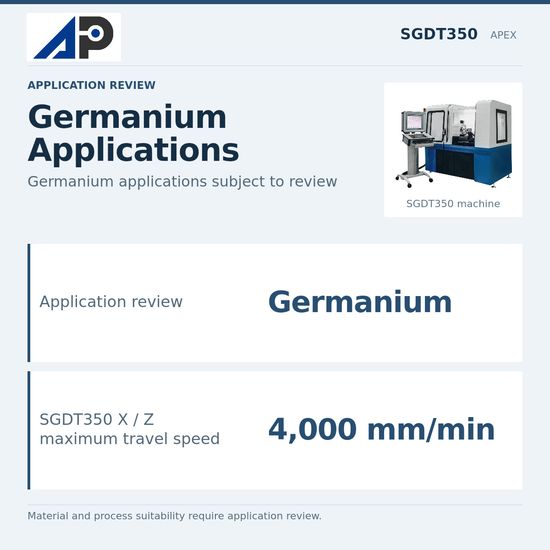
Spdt Machine for Silicon Optical Mirror and Lens Machining

Ultra-Precision Spdt Machine for Germanium Infrared Lenses

Spdt Equipment for Toroidal Lens and Mirror Machining

I have found results from400+products and200+suppliers aboutLens grinding machine price


The price is primarily driven by automation levels (Manual vs. CNC) and processing precision. For B2B buyers, ensure the machine supports high-speed diamond wheels and has a positioning accuracy of ±0.02mm or better. Additionally, check if the price includes integrated cooling systems and automatic lens clamping mechanisms, as these features significantly impact long-term operational efficiency and output quality.
To ensure safety and legal entry into various markets, the machine must carry the CE Marking for the European market or UL/ETL certification for North America. Specifically, look for compliance with ISO 12100:2010 (Safety of machinery) and IEC 60204-1 regarding electrical equipment. Verifying these certifications prevents costly customs seizures and ensures workplace safety compliance.
Not all machines are universal. You must confirm if the equipment is designed for CR-39 (Plastic), Polycarbonate, High-Index, or Mineral Glass. Machines capable of processing Polycarbonate require specific dry-cutting or high-torque modes to prevent melting. A machine that offers multi-material compatibility will have a higher upfront cost but provides greater market versatility for optical labs.
Beyond the initial purchase price, consider the consumable costs, such as diamond grinding wheels and filtration pads. High-quality machines should offer a self-diagnosis system to alert operators of wear. Buyers should prioritize suppliers who provide a 12-24 month warranty and have a documented spare parts availability policy to minimize downtime, which is a critical factor in calculating the TCO.
Lens grinding machines are sensitive optical instruments. You must mandate vacuum-sealed moisture-proof packaging and reinforced wooden crate packing (IPPC standard). It is highly recommended to use shock-absorber labels (e.g., ShockWatch) on the crates. For transaction security, utilize Trade Resources on Made-in-China.com to verify the supplier's Audit Reports and ensure they have experience in shipping precision instruments.
Focus on the Total Package Value rather than just the unit price. Negotiate for inclusive spare parts kits (extra wheels, gaskets) and extended technical support. If purchasing in bulk, aim for a 10-15% discount by leveraging a 30% deposit and 70% balance payment against the Bill of Lading (B/L). Always request a pre-shipment video inspection showing the specific machine's serial number and a successful calibration test.
Ensure the supplier provides the correct HS Code (typically 8464.20) to determine accurate import duties. You should clarify the Incoterms; while FOB (Free On Board) is standard, CIF (Cost, Insurance, and Freight) may be easier for first-time buyers. Be aware of Anti-Dumping Duties that may apply to specific machinery categories in your country and ensure all User Manuals and UI languages are translated into your local language to avoid operational errors.