Medical spike manufacturers
I have found results from400+products and200+suppliers aboutMedical spike
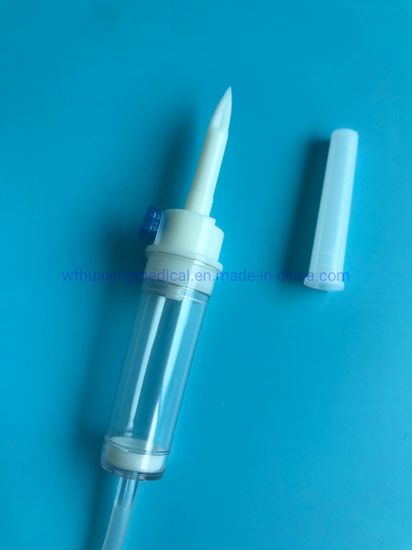
Medical Non-Vented IV Infusion Transfer Spike for Tubing ID5.5mm or Od3.2mm, None Vented Administration Set Bottle Breaker Puncture
US$0.08-0.10
50,000 Sets(MOQ)
Sample AvailableMedical None Vented IV Infusion Spike for 4.0mm Od Tubing, Non-Vented Surgispike Adminstration Set Puncture Outfit Device Bottle opener Trcar
US$0.08-0.10
20,000 Sets(MOQ)
Sample AvailableMedical CT MRI Agent Female Luer Lock Syringe IV Infusion Straight Non-Vented Spikes to Tube 4mm 5.5mm 6mm 7.5mm, Contrast Media Vented Spike
US$0.01-0.05
5,000 Sets(MOQ)
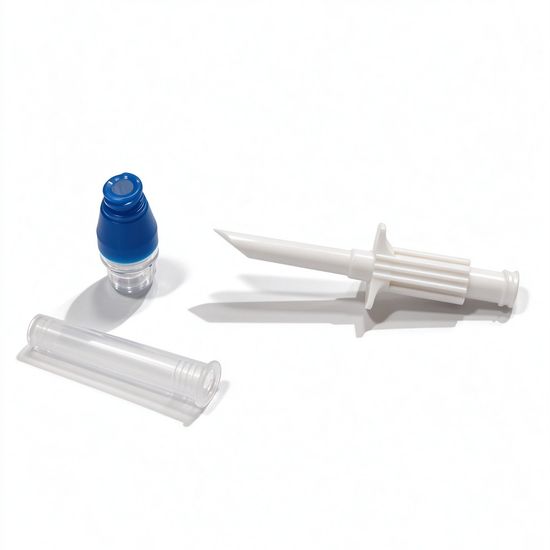
Sample AvailableMedical 12mm Female Luer Lock Connector Mini Pin Spike, Vented Hyperal Piercing Spikes with Cap
US$0.70-1.00
50,000 Sets(MOQ)
Sample AvailableMedical Chemotherapy Cancer Drug Dispensing Valve Vented Mini Spike, Chemical Treatment Dual Membrane Vial Needle Adapter
US$0.01-0.05
5,000 Sets(MOQ)
Sample AvailableMedical Angiographic Injector Syringe Injection Puncture Device Bottle Stabber with Large Handle, CT MRI Contrast and Saline Transfer Mini Spike Mini-Spike
US$0.70-0.80
3,000 Sets(MOQ)
Sample AvailableMedical Flushing Device Irrigator Irrigation Syringe Non-Vented Spikes to Tube 4mm 5.5mm 6mm 7.5mm, IV Infusion Female Luer Lock Slip Vented Spike Assemblies
US$0.01-0.05
50,000 Sets(MOQ)
Sample AvailableInfusion Pipeline Delivery Contrast Agent Drug Absorption Device, Clinical Female Luer Lock Medicine Container Puncture Spike
US$0.70-1.00
50,000 Sets(MOQ)
Sample Available Sourcing guidance for Medical Spike
What are the critical material requirements for Medical Spikes to ensure patient safety?
Medical spikes must be manufactured using medical-grade, non-toxic, and biocompatible materials, typically ABS (Acrylonitrile Butadiene Styrene) or Polycarbonate. It is essential that the material is BPA-free and DEHP-free to prevent chemical leaching into intravenous fluids. The spike must possess high structural rigidity to ensure it can puncture rubber stoppers without bending or breaking, while maintaining a smooth surface finish to prevent particulate contamination.
Which international compliance standards should B2B buyers verify for Medical Spikes?
Buyers must ensure the product complies with ISO 8536-4 (Infusion equipment for medical use). The manufacturing facility should hold an ISO 13485 certification for medical device quality management systems. For market entry, verify CE Marking (MDR 2017/745) for the European Union or FDA 510(k) clearance for the United States. Additionally, a Sterilization Validation Report (e.g., EO Gas or Gamma Radiation) is mandatory to ensure the product is pyrogen-free.
What functional design features are essential for high-performance Medical Spikes?
A high-quality medical spike should feature a sharp, tapered tip for low insertion force and a vented design with a hydrophobic air filter (0.22 micron) to prevent vacuum formation in glass bottles while blocking microbial entry. The luer lock connector must be compatible with standard IV tubing to ensure a leak-proof connection. For multi-dose applications, look for integrated check valves to prevent backflow and cross-contamination.
How can buyers evaluate the economic feasibility and scalability of a Medical Spike supplier?
Evaluate the Total Cost of Ownership (TCO) by factoring in the unit price, sterilization costs, and specialized medical packaging. Top-tier suppliers on Made-in-China.com often offer tiered pricing, where bulk orders exceeding 50,000 units can reduce costs by 15-25%. Buyers should also assess the supplier's cleanroom capacity (Class 100,000/ISO 8) to ensure they can scale production during peak demand without compromising sterility.
Cross-Border Procurement Risks and Strategic Advice for Medical Devices
What are the primary risks in cross-border sourcing of Medical Spikes and how to mitigate them?
The biggest risk is regulatory seizure at customs due to improper documentation. Mitigate this by requesting a Declaration of Conformity and ensuring the HS Code (typically 9018.39) is correctly declared. Another risk is sterility breach during transit; ensure the outer cartons are double-walled and the primary sterile barrier (blister pack) is tested for seal integrity according to ASTM F1929.
What strategies should be used when negotiating with medical component suppliers?
Focus negotiations on Quality Agreement (QA) terms rather than just price. Demand a fixed defect rate (AQL 1.0 or lower) and negotiate for retained samples from every batch for at least two years. For long-term partnerships, request transparency in raw material sourcing to ensure consistency in plastic resin grades, which prevents unexpected biocompatibility failures.
How can transaction security be ensured for large-scale medical orders?
Utilize secure payment escrow services provided by reputable platforms like Made-in-China.com to ensure funds are only released upon verification of shipping documents. For first-time large orders, it is highly recommended to hire a third-party inspection agency (like SGS or Intertek) to perform a Pre-Shipment Inspection (PSI) to verify quantity, packaging integrity, and sterilization batch numbers.
What are the best practices for shipping medical disposables internationally?
Medical spikes are lightweight but high-volume; therefore, sea freight is most cost-effective for bulk, while air freight should be reserved for urgent sterile stock. Ensure the shipping environment is temperature-controlled if the spikes are integrated with other sensitive components. Always include a Packing List, Commercial Invoice, and Certificate of Analysis (CoA) in every shipment to facilitate smooth customs clearance.