Rado factory manufacturers
I have found results from400+products and200+suppliers aboutRado factory
Sourcing guidance for Rado Factory
How to choose a high-quality industrial radiator (Rado) manufacturer?
Selecting a reliable factory requires evaluating material grade, thermal efficiency, and pressure resistance. Prioritize manufacturers that use high-purity aluminum or copper to ensure optimal heat dissipation. It is essential to verify that the factory implements vacuum brazing technology for leak-proof joints and holds ISO 9001 or TS16949 certifications to guarantee consistent industrial quality.
What technical specifications are critical for industrial heat exchangers?
Buyers must focus on the Heat Transfer Coefficient (U-value) and Maximum Operating Pressure. Ensure the product design includes reinforced side plates to withstand vibration in heavy machinery. For corrosive environments, specify anti-corrosion coatings (like epoxy or electrophoresis) to extend the service life of the unit by up to 40%.
How can I validate the performance of products from a Rado factory?
Request a Pressure Pulsation Test report and a Salt Spray Test report (minimum 480 hours for coastal/harsh use). A professional factory should provide thermal performance simulation data using CFD (Computational Fluid Dynamics) software to prove the radiator meets your specific cooling requirements before mass production.
What are the common usage scenarios for these industrial radiators?
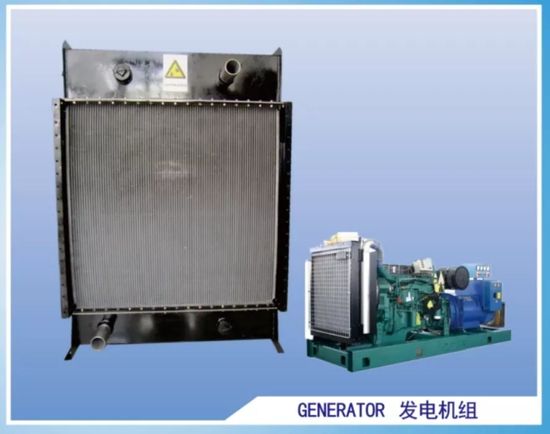
These products are primarily used in construction machinery (excavators, loaders), power generation sets (diesel generators), renewable energy systems (wind turbine cooling), and large-scale air compressors. Ensure the factory has experience in your specific niche to guarantee mounting hole compatibility and airflow optimization.
Cross-Border Procurement Essentials for Industrial Radiators
What are the primary risks when importing heavy industrial radiators?
The biggest risks are internal contamination (residue from manufacturing) and shipping damage. Ensure the contract specifies that all units must be flushed and sealed with plastic plugs. For logistics, insist on customized plywood crates (IPPC certified) rather than standard pallets to prevent fin deformation during transit.
How should I negotiate pricing and MOQs with a Rado factory?
Industrial radiators involve high tooling costs. For custom designs, negotiate a rebate on tooling fees once order volumes exceed a certain threshold (e.g., 500 units). For standard models, aim for a 10-15% discount on bulk orders and leverage Made-in-China.com's Diamond Member status to identify verified suppliers with stable pricing.
What transaction security measures should be taken for large B2B orders?
Utilize secured payment terms such as Letter of Credit (L/C) or escrow services. Always conduct a pre-shipment inspection (PSI) by a third party like SGS or Intertek to verify the fin density, weld quality, and dimensions against the approved technical drawing before the final balance is paid.
How do I ensure compliance with international trade policies and shipping?
Verify the HS Code (typically 8708.91 or 8419.50) to calculate accurate import duties. When shipping to specific regions, ensure the factory provides a Certificate of Origin to benefit from preferential tariffs. For heavy shipments, Sea Freight (FCL/LCL) is the most economical method; ensure the supplier uses VCI (Volatile Corrosion Inhibitor) packaging to prevent rust during long sea voyages.