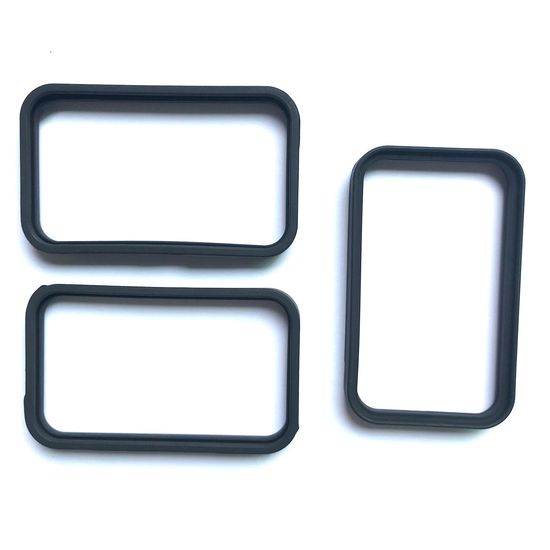
Durable Rubber Dam Gate Seals for Water Control Reservoir Sealing and Waterproofing

Hydroelectric Dam Gate Seal Rubber Seal Water Gate Bottom Water Stop

P Type Rubber Sluice Gate Seal Anti-Aging Dam Water Seal for Reservoir

I have found results from10000+products and5000+suppliers aboutRubber seals for water tank


The choice of material is critical for longevity and safety. For potable water, you must prioritize EPDM (Ethylene Propylene Diene Monomer) due to its excellent resistance to UV, ozone, and weathering. If the tank stores hot water, ensure the rubber can withstand temperatures up to 120°C. For industrial tanks involving oils or chemicals, NBR (Nitrile) or Viton (FKM) should be selected to prevent material degradation and leakage.
When sourcing for residential or municipal water systems, ensure the seals meet FDA (Food and Drug Administration) or NSF/ANSI 61 standards, which certify that the rubber does not leach harmful chemicals into the water. For the European market, look for WRAS (Water Regulations Advisory Scheme) or LFGB certification to ensure legal compliance and consumer safety.
Request technical data sheets focusing on Compression Set, which indicates the rubber's ability to return to its original thickness after being compressed; a lower percentage is better for long-term sealing. Additionally, verify the Hardness (Shore A)—typically 60-70 Shore A for standard tanks—and Tensile Strength to ensure the seal can handle the hydrostatic pressure of a full tank without tearing.
Yes, most professional manufacturers on Made-in-China.com offer OEM/ODM services. You should provide CAD drawings or 3D samples to ensure the cross-sectional profile (e.g., P-shape, D-shape, or U-shape) matches your tank's flange perfectly. Discuss extrusion vs. molding processes with the supplier to find the most cost-effective method for your specific shape and volume.
The primary risk is material substitution, where a supplier might use lower-grade recycled rubber to reduce costs. To mitigate this, always request a pre-shipment sample and consider a third-party lab test (SGS or TUV) to verify the polymer content. Another risk is shelf-life degradation; ensure the supplier follows ISO 2230 standards for storage to prevent the rubber from becoming brittle before it reaches you.
Focus on Tiered Pricing based on volume; for rubber products, the setup cost for molds is a major factor. Negotiate for the mold fee to be refunded once your cumulative order reaches a certain quantity (e.g., 5,000 units). Also, request free replacement for defective units exceeding a 1% AQL (Acceptable Quality Level) to ensure you aren't paying for manufacturing errors.
Always use Secured Payment services provided by reputable platforms like Made-in-China.com to ensure your funds are only released after you confirm receipt of the goods. Avoid direct wire transfers to personal accounts. For large contracts, use Letter of Credit (L/C) to protect both parties against non-performance or shipping delays.
Rubber seals are sensitive to extreme heat and compression. Instruct the supplier to use UV-resistant packaging and avoid over-stacking heavy boxes, which can cause permanent deformation of the seals. For long-distance sea freight, ensure the containers are kept away from heat sources and that the packing list includes clear batch numbers for traceability.