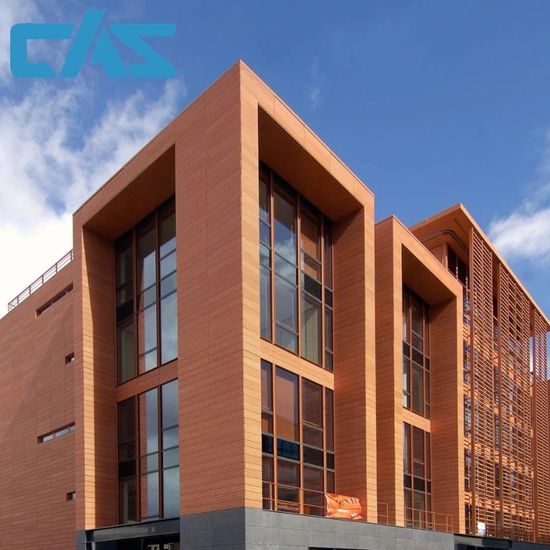
Ventilated Terracotta Facade Panels for Durable Exterior Building Cladding Applications Projects

Custom Terracotta Facade Panel Curtain Wall

Modern Brick Wall Panels for Chic Interior Design and Stylish Spaces

I have found results from2000+products and700+suppliers aboutTerracotta facade panel


Buyers should prioritize water absorption rates (ideally <6% or <10% depending on climate) to ensure frost resistance and durability. The breaking load and flexural strength must meet international standards like ASTM C1088 or EN 1304 to withstand wind pressure. Additionally, verify the density (typically 2.2-2.4 g/cm³) and dimensional tolerances, as precision in length and thickness is critical for seamless installation in rainscreen systems.
For the European market, CE Marking and compliance with EN 14411 are essential. In the North American market, look for ASTM C1167 or C1088 certifications. Furthermore, ensure the supplier provides ISO 14001 (Environmental Management) and ISO 9001 (Quality Management) certifications. For green building projects, request LEED contribution data or EPD (Environmental Product Declaration) reports to verify the product's sustainability credentials.
Natural surfaces offer the best UV resistance as the color is inherent to the clay. Glazed finishes provide a wider color palette and better resistance to graffiti and pollutants but require verification of crazing resistance. Sandblasted or grooved textures can enhance aesthetic depth but may accumulate dust in high-pollution areas. Ensure the supplier uses high-temperature firing (above 1100°C) to guarantee color permanence and prevent fading over decades.
Terracotta panels are typically part of a ventilated rainscreen system. You must confirm if the supplier provides the aluminum alloy support system (T-profiles, brackets, and clips) and if these components are corrosion-resistant (Grade 6063-T5 or T6). Request CAD shop drawings and static calculation reports to ensure the system can handle the specific dead load and local wind loads of your project site.
The biggest risk is breakage during transit and unloading. To mitigate this, mandate fumigated wooden crate packaging with EPE foam buffers between each panel. Ensure the container is tightly packed to prevent shifting. It is highly recommended to use CIF (Cost, Insurance, and Freight) terms or purchase independent marine cargo insurance that covers 'All Risks' to protect against physical damage during the sea voyage.
Look for 'Audited Suppliers' on Made-in-China.com who have undergone third-party verification by agencies like SGS, Bureau Veritas, or TÜV Rheinland. Review their Audit Reports specifically for production capacity and QC processes. Always request a physical sample to test for color consistency and surface finish, and consider hiring a third-party inspector (like V-Trust or QIMA) to perform a Pre-Shipment Inspection (PSI) to check for cracks and dimensional accuracy.
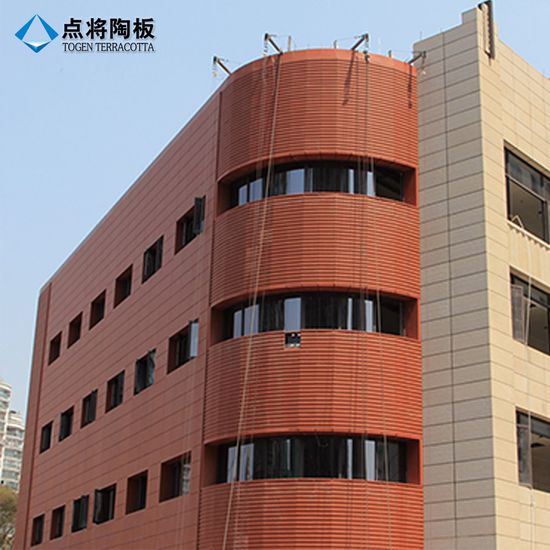
Negotiate based on Total Project Volume rather than individual shipments to secure bulk discounts of 10-20%. Discuss payment terms that link milestones to production stages, such as 30% deposit and 70% against the Bill of Lading (B/L). Additionally, negotiate for a 1-2% extra 'wastage' allowance (free spare panels) to be included in the shipment to cover potential on-site cutting losses or minor transport chips.
Check the HS Code (typically 6904.90) against your country's tariff schedule. Be aware that some regions (like the EU or USA) may have anti-dumping duties on certain Chinese ceramic products. Work with a professional customs broker to verify if terracotta facade panels fall under these specific categories. Ensure the supplier provides a Certificate of Origin (CO), which may help in applying for preferential tariff rates under specific trade agreements.