
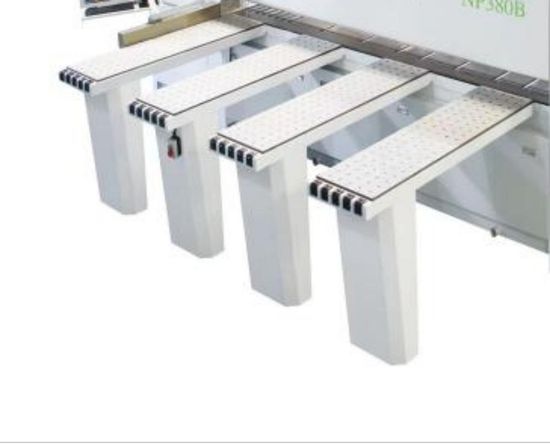
Factory Woodworking Horizontal Panel Saw

High-Precision CNC Automatic Feeding Panel Saw for Efficient Cutting

Horizontal CNC Computer Panel Saw

Semi-Auto Acrylic Wood Panel Cutting Saw

Precision Electric Panel Cutting Saw for Wood Professionals

I have found results from700+products and300+suppliers aboutUsed panel saw


When evaluating a used panel saw, you must prioritize the mechanical precision and motor health. Key specs include the sliding table length (typically 1600mm to 3800mm), the main saw blade diameter (usually 300mm-400mm), and the tilting angle capability (90° or 45°-90°). Ensure the main motor power is at least 5.5kW for industrial use and verify the scoring saw motor is functional to prevent chipping on laminated boards. Check the sliding table guide rail type; chrome-plated round bars or linear guides are preferred for smoothness.
Request a video of the machine running to listen for abnormal bearing noise or vibrations. Inspect the sliding table for 'play' or wobbling, as this indicates worn rollers. Check the parallel fence adjustment mechanism for accuracy and the cast iron fixed table for any cracks or significant rusting. A well-maintained machine should have a service log or evidence of regular lubrication on the internal lifting gears.
The machine should ideally carry a CE mark for European markets or meet UL/CSA standards for North America. Essential safety features include a blade guard with dust extraction port, an emergency stop button within reach, and a riving knife to prevent kickback. For used equipment, ensure the electrical cabinet is clean and that the wiring complies with ISO or local industrial safety codes to avoid fire hazards.
Purchasing a used high-end brand (like Altendorf or SCM) can be highly feasible if the price is 40-60% lower than new, as these frames last decades. However, factor in the cost of replacing consumables like belts, bearings, and saw blades. If the PLC or digital display is faulty, repair costs can be prohibitive; therefore, manual or semi-automatic used models often offer better ROI for small-to-medium enterprises.
The biggest risk is 'As-Is' quality discrepancies. Unlike new goods, used machines vary in condition. To mitigate this, use Made-in-China.com's audit services or hire a third-party inspector (like SGS) to verify the machine's condition before final payment. Another risk is export restrictions; ensure the supplier provides a CCIC (China Customs Inspection & Certification) report if required by your country for used mechanical equipment.
Focus your negotiation on refurbishment depth and spare parts. Ask the supplier to include a set of new alloy saw blades and a spare drive belt in the deal. Negotiate for professional export packaging (wooden crates with vacuum plastic wrapping) to prevent sea-salt corrosion during transit. Always clarify if the price includes loading fees (FOB terms).
Always use Secured Payment services provided by reputable platforms like Made-in-China.com to ensure funds are only released after proof of shipment. For shipping, choose Full Container Load (FCL) if possible to avoid damage from other cargo in LCL. Ensure the machine is bolted to the container floor and treated with anti-rust oil before departure.