
Satisfies 1 requirement
300W/500W/1500W/2000W/3000W/5000W/6000W/8000W/10000W Solar Pure Sine Wave Power Inverter 12V/24V/48V/60V/72V DC to AC 110V/120V 220V Car Power Inverter
US$21.88-24.00
1 Piece(MOQ)

9000+ products and 4000+ suppliers results


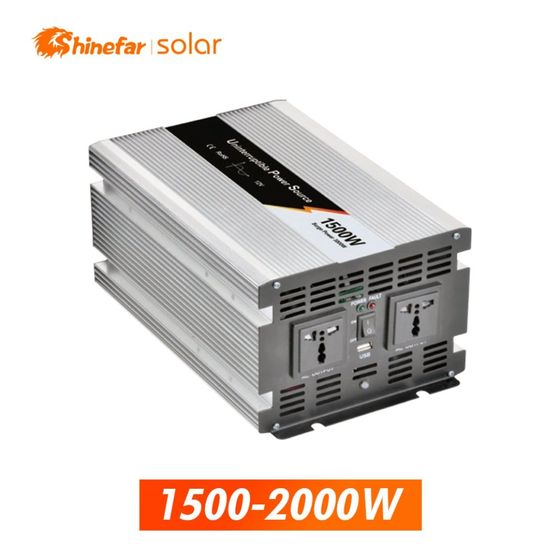
When sourcing a 1500w inverter, the most critical factor is the Total Harmonic Distortion (THD), which should be less than 3% to ensure compatibility with sensitive electronics like medical equipment and laptops. You must also verify the Peak Power (Surge Capacity); a high-quality 1500w unit should handle a 3000w surge for at least 1-2 seconds to start inductive loads like refrigerators or power tools. Additionally, check the Conversion Efficiency, aiming for over 90% to minimize energy loss and heat generation.
For B2B buyers, compliance is non-negotiable. Ensure the product carries CE (LVD/EMC) for the European market, UL 458 for North American mobile applications, or RoHS for environmental safety. The inverter must feature integrated protection circuits for Over-voltage, Low-voltage, Over-temperature, Short-circuit, and Reverse Polarity. Look for suppliers on Made-in-China.com who provide verified test reports rather than just self-declaration stickers.
A robust thermal management system is vital. Prioritize models with Intelligent Temperature-Controlled Fans that only activate when the load or temperature reaches a specific threshold; this reduces noise and extends fan life. The housing should be made of Aluminum Alloy rather than plastic to act as an effective heat sink. For industrial use, ensure the internal PCB is coated with conformal coating to protect against moisture and dust.
Since this is a cross-border purchase, you must specify the Output Voltage (110V/120V or 220V/230V/240V) and Frequency (50Hz or 60Hz) based on your target market. Request Universal Sockets, GFCI outlets (for US markets), or region-specific sockets (UK, EU, AU). High-end models should also include a 5V/2.1A USB port and a Remote Control Port for convenient operation in RV or off-grid setups.
Many low-cost suppliers mislabel 'Modified Sine Wave' as 'Pure.' To mitigate this risk, request an Oscilloscope Test Video from the supplier showing the output waveform under load. Alternatively, use Made-in-China.com's Inspection Service to have a third-party verify the waveform and internal components (like the size of the copper transformer and MOSFETs) before final payment.
Inverters contain heavy components like transformers and capacitors. For bulk orders, FOB (Free On Board) is generally more cost-effective, allowing you to use your own freight forwarder. Ensure the packaging meets UN38.3 standards if batteries are included, though for standalone inverters, Double-Walled Corrugated Cartons with EPE foam inserts are essential to prevent transit damage. Always clarify the Incoterms to avoid hidden port charges.
Returning defective units internationally is often cost-prohibitive. Negotiate for a 1% - 2% spare parts allowance (e.g., extra PCBA boards or cooling fans) to be included with the shipment. Ensure the supplier provides a minimum 12-24 month warranty and confirm they can provide technical video support for your local repair team. Prioritize Diamond Members on Made-in-China.com as they typically have more established after-sales protocols.
To ensure payment safety, utilize Secured Trading Services offered by the platform. Never wire full payments to private bank accounts; always use the company's official corporate account verified by the platform. Implement a 30% deposit / 70% balance payment structure, where the balance is paid only after a Pre-shipment Inspection (PSI) confirms the goods meet your technical specifications.