
Satisfies 1 requirement
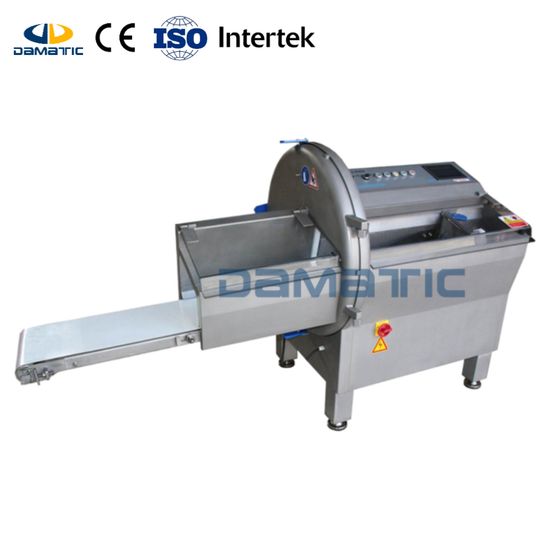
Industrial Automatic Meat Slicing Machine Commercial Bacon Cheese Slicer
US$2,955.00
1 Piece(MOQ)

I have found results from7000+products and2000+suppliers aboutCheese slicer




For B2B procurement, prioritize Food-Grade Stainless Steel (304 or 316) for the blade and body to ensure corrosion resistance and longevity. If the slicer uses a wire, ensure it is made of high-tensile strength stainless steel to prevent snapping during heavy use. For handles, ergonomic designs using BPA-free plastics or brushed aluminum are preferred for grip and hygiene.
To ensure market entry and consumer safety, products must meet FDA (Food and Drug Administration) standards for the US market or LFGB (Lebensmittel- und Futtermittelgesetzbuch) for the European market. Additionally, look for NSF (National Sanitation Foundation) certification, which guarantees the equipment is easy to clean and won't harbor bacteria.
Wire slicers are ideal for soft and semi-soft cheeses (like Brie or Mozzarella) to prevent sticking and maintain shape. Plane slicers are best for hard cheeses (like Parmesan or Gouda) to produce consistent thin curls. For high-volume commercial kitchens, adjustable thickness settings are a critical function to provide versatility across different menu items.
Look for non-slip rubber feet to provide stability during operation. The tension adjustment mechanism for wire slicers should be robust to allow for easy replacement and tightening. For rotary or mandoline-style slicers, integrated blade guards are essential to minimize the risk of workplace injuries.
The primary risks include material fraud (substituting 304 steel with lower grades) and poor wire tensioning. To mitigate this, request a Material Test Report (MTR) and use Made-in-China.com's Secured Trading services to ensure the product matches the agreed-upon specifications before final payment.
Focus on Total Cost of Ownership (TCO) rather than just the unit price. Negotiate for spare parts inclusion (e.g., 5-10% extra cutting wires) and customized packaging for retail readiness. For large orders, request a staggered payment schedule linked to production milestones and quality inspection results.
Cheese slicers, especially those with wires or sharp blades, require protective inner padding and moisture-proof packaging to prevent rust during sea freight. Ensure the supplier uses double-walled corrugated boxes. For shipping to the US or EU, clarify Incoterms (e.g., DDP or CIF) to understand who handles customs clearance and local duties.
Always start by checking if the supplier is an Audited Supplier on Made-in-China.com. Request a pre-shipment inspection (PSI) by a third party like SGS or Intertek to verify dimensional accuracy, blade sharpness, and plating quality. A sample order is mandatory to test the mechanical fatigue of the slicing arm or wire.