
Satisfies 1 requirement
Heavy Duty Gooseneck Hydraulic Low Loader for Excavators
US$10,999.00-15,999.00
1 Piece(MOQ)

I have found results from10000+products and6000+suppliers aboutLowboy loader


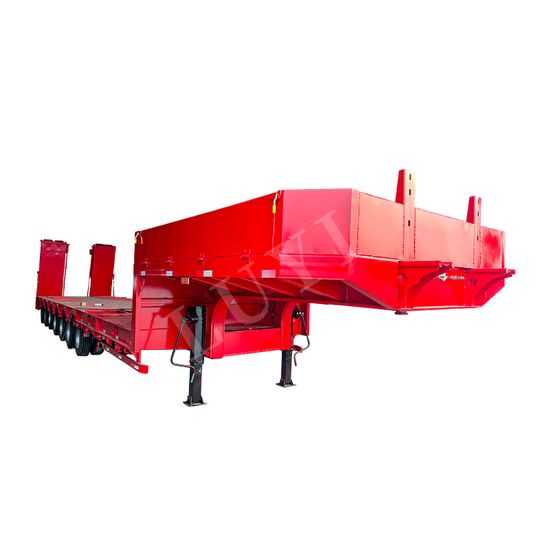


When procuring a Lowboy Loader, the most critical factor is the Load Capacity, typically ranging from 20 to over 100 tons. You must verify the Gooseneck Type (Fixed, Mechanical Detachable, or Hydraulic Detachable), as Hydraulic Detachable Goosenecks (RGN) are preferred for heavy machinery due to their ease of front-loading. Additionally, inspect the Deck Length and Height; a low-profile deck (usually 18-24 inches high) is essential for transporting tall equipment under bridges. Ensure the use of High-Tensile Steel (e.g., Q345B or T700) to prevent structural deformation under extreme stress.
For the US market, ensure the trailer meets DOT (Department of Transportation) and NHTSA standards. For European markets, CE marking and COC (Certificate of Conformity) are required. Globally, look for ISO 9001:2015 for manufacturing quality management. It is vital to confirm that the braking system complies with ABS or EBS requirements and that the lighting systems meet the specific road safety regulations of the destination country.
Assess the Axle Brand and Rating; reputable brands like FUWA or BPW are recommended for their global availability of spare parts. Depending on the weight, you may need 2, 3, or multi-axle configurations, potentially including steerable axles for better maneuverability. Check the Suspension System, where Air Suspension is ideal for protecting sensitive loads, while Mechanical Leaf Springs offer cost-effective durability for rugged terrain. Ensure the welding process uses Submerged Arc Welding for maximum joint integrity.
The main risks include structural defects that are not visible in photos and non-compliance with local road dimensions. To mitigate this, always request a Third-Party Pre-Shipment Inspection (PSI) through agencies like SGS or Intertek. Furthermore, ensure the supplier provides a detailed technical drawing for approval before production begins to avoid 'out-of-gauge' issues at the destination port.
Lowboy Loaders are typically shipped via Ro-Ro (Roll-on/Roll-off) or Bulk Cargo vessels. If the trailer is modular, it might be possible to fit it into a 40HC container by removing the gooseneck and tires, which significantly reduces freight costs. Always clarify the Incoterms; CIF (Cost, Insurance, and Freight) is common, but FOB (Free On Board) allows you more control over the shipping timeline and costs. For reliable Chinese manufacturers, platforms like Made-in-China.com offer verified suppliers with experience in heavy machinery logistics.
Focus on the Total Cost of Ownership (TCO) rather than just the unit price. Negotiate for spare parts packages (e.g., extra tires, brake pads, and air bags) to be included in the initial price. Request a warranty period of at least 12-24 months on the main beam. For payment security, utilize Letters of Credit (L/C) or Escrow services to ensure funds are only released upon verification of shipping documents and inspection reports.