Wholesale at Low Prices Industrial Cement Rotary Feeder for Cement Production

Wholesale Price Pneumatic Vacuum Loader Feeder for Plastic Granules

Food Grade Sanitary Stainless Steel Rotary Feeder for Grain Flour Processing

I have found results from400+products and200+suppliers aboutWholesale feeder clamp


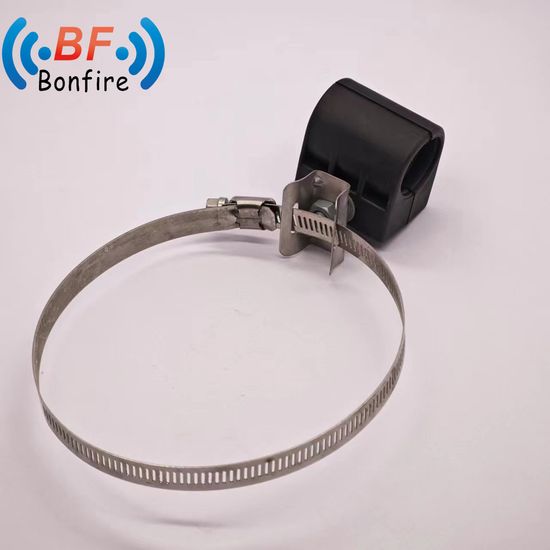
When sourcing feeder clamps, prioritize 304 or 316 stainless steel for the hardware to ensure corrosion resistance in outdoor environments. The plastic inserts should be made of UV-resistant Polypropylene (PP) or Fiber Reinforced Polyamide (PA66) to prevent brittleness under sun exposure. Ensure the clamp size matches the specific cable diameter, such as 1/2", 7/8", or 1-1/4", to prevent signal interference caused by over-tightening or cable slippage.
Suppliers must provide RoHS and REACH certifications to ensure the absence of hazardous substances. For structural integrity, look for products that have passed Salt Spray Testing (minimum 96-500 hours) and Temperature Cycling Tests (-40°C to +85°C). Adherence to ISO 9001:2015 is a baseline requirement for manufacturing consistency in high-volume wholesale orders.
Focus on the tensile strength and clamping force. A high-quality clamp should withstand a specific pull-off force without damaging the cable jacket. Check the threading precision of the bolts and nuts; they should be smooth to prevent galling, which is a common failure point in stainless steel hardware during field installation.
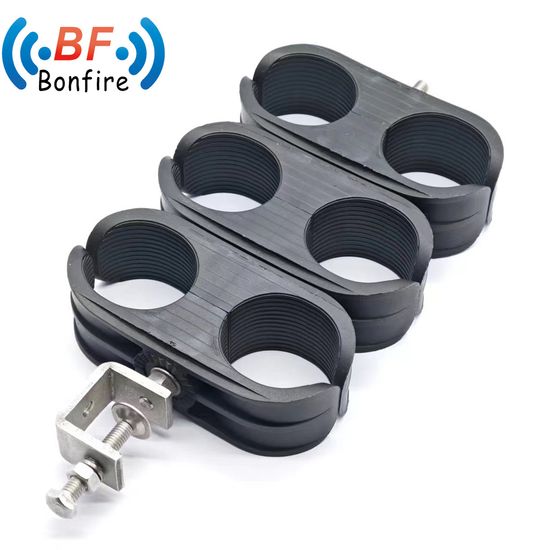
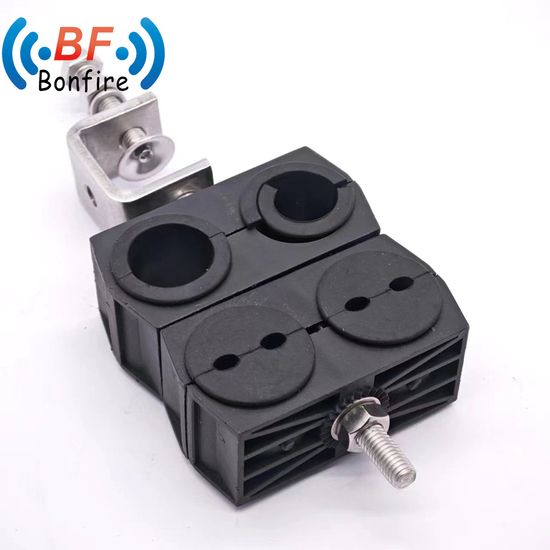
For coaxial cable installations on cell towers, multi-run clamps (e.g., 1-way, 2-way, or 3-way) are preferred to optimize space. In coastal or high-humidity areas, 316 stainless steel is mandatory to prevent premature failure. For fiber optic cables, ensure the clamp has rubber grommets or soft inserts to avoid micro-bending losses.
The biggest risk is material substitution, where a supplier might use 201 stainless steel instead of 304 to lower costs, leading to rust within months. To mitigate this, request a Material Test Report (MTR) and use third-party pre-shipment inspections to conduct a chemical analysis (PMI test) on the metal components.
Feeder clamps are high-volume, low-margin items. Negotiate based on total project volume rather than individual shipments to secure tier-1 pricing. For large-scale infrastructure, aim for a 15-20% discount on orders exceeding 5,000 units. Request free samples for technical approval before committing to a full production run.
Always utilize secure payment terms such as Letters of Credit (L/C) for large volumes or Trade Terms provided by Made-in-China.com to ensure funds are only released upon proof of shipment. Avoid direct wire transfers to unknown accounts and verify the supplier's Business License and Export Qualification.
Due to the high weight-to-volume ratio, Sea Freight (LCL or FCL) is the most economical choice. Ensure the supplier uses heavy-duty, moisture-proof packaging (e.g., reinforced cartons on fumigated pallets) to prevent damage during transit. For urgent site requirements, consider Sea-Air combined transport to balance cost and speed.