

Salted sheep casing
500+ products and 100+ suppliers results
Commonly Used:
US$
—
Customization Available
Sample Available
Manufacturer First
Product Attributes:
Certification: ISO
Storage Method: Normal
Shelf Life: >12 Months
Processing: Sausage
Certification: FDA
Certification: HACCP
Certification: BRC


Satisfies 1 requirement
Chinese Factory High Quality and Reliable Collagen Sausage Casings
US$0.06-0.10
1,000 Meters(MOQ)

Satisfies 1 requirement
Plastic Nylon Sausage Casing, Plastic Sausage Cover, Plastic Sausage Skin,
US$0.02-0.16
1,000 Meters(MOQ)

Satisfies 1 requirement
Caliber 13-32mm Shirred and Rolled Type Edible Sausage Collagen Casing
US$0.06-0.10
1,000 Meters(MOQ)


Satisfies 1 requirement
Edibleand Extra Strength Collagen Casings for Thailand Processing Meat and Manufacturing
US$0.06-0.10
1,000 Meters(MOQ)

Satisfies 1 requirement
Plastic Polyamide Nylon Casings for Different Sausages
US$0.02-0.16
1,000 Meters(MOQ)

Satisfies 1 requirement
15mm-150mm PVDC Printed Plastic Sausage Casing Can Be Cooked and Easy Peeling
US$0.02-0.16
1,000 Meters(MOQ)

Satisfies 1 requirement
Halal Hamburger and Hot Dog Sausage Collagen Casings Can Be Cooked, Fried, Smoked, BBQ Casing
US$0.06-0.10
1,000 Meters(MOQ)

Satisfies 1 requirement
Sausage Packing Edible Collagen Casing Can Be Cooked, Fried, Smoked, BBQ Collagen Casing
US$0.06-0.10
1,000 Meters(MOQ)

Satisfies 1 requirement
New Natural Collagen Casing Hot Dog Roast Sausage Dried Shell Kitchen Baster Sausage Collagen Casing
US$0.06-0.10
1,000 Meters(MOQ)

Satisfies 1 requirement
German Kosher Sausage Casings Can Be Cooked, Fried, Smoked, BBQ Casing
US$0.06-0.10
1,000 Meters(MOQ)

Satisfies 1 requirement
Edible Collagen Sausage Casing Supplier Can Be Cooked, Smoked, Fried, BBQ Collagen Casing
US$0.06-0.10
1,000 Meters(MOQ)

Satisfies 1 requirement
Collagen Casings for Pepperoni, Salami, Frankfurter Sausages, Taiwan Sausages
US$0.06-0.10
1,000 Meters(MOQ)
Satisfies 1 requirement
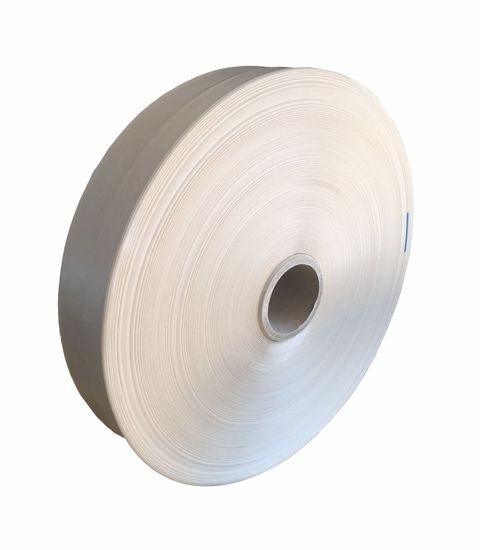
Outstanding Heat-Resistant Collagen Casing in Roll
US$0.06-0.10
1,000 Meters(MOQ)

Satisfies 1 requirement
Halal Edible Good Quality Collagen Sausage Casing
US$0.06-0.10
1,000 Meters(MOQ)

Satisfies 1 requirement
Plastic Sausage Casings for Freezing Cheese Flat Width180mm
US$0.02-0.16
1,000 Meters(MOQ)

Satisfies 1 requirement
Small Caliber White Color Polyamide Sausage Caising Plastic Casing
US$0.02-0.16
1,000 Meters(MOQ)


Satisfies 1 requirement
Big Caliber Knotted Fibrous Casings Can Be Printed
US$0.06-0.10
1,000 Meters(MOQ)


Satisfies 1 requirement
14m/15m/21m Per Stick Collagen Sausage Casing From China Producer
US$0.06-0.10
1,000 Meters(MOQ)

Satisfies 1 requirement
Hotdog, Ham and Sausage Used Polyamide Plastic Casing
US$0.03-0.16
1,000 Meters(MOQ)
Sourcing guidance for Salted Sheep Casing
What are the key quality indicators for selecting premium Salted Sheep Casings?
When sourcing sheep casings, the primary quality indicators are caliber (diameter) accuracy, strand length, and wall strength. Premium casings should have a uniform caliber (e.g., 18/20mm, 20/22mm) to ensure consistent sausage sizing. The color should be natural white to light pink; avoid casings that appear grey or yellow, as this indicates age or poor processing. Furthermore, check for the absence of holes (pinholes) and ensure the texture is elastic and translucent, which prevents bursting during high-speed stuffing.
Which international compliance standards and certifications are mandatory for this product?
As an animal-derived food byproduct, compliance is critical. Buyers must ensure the supplier provides a Health Certificate and a Certificate of Origin issued by government authorities. For entry into major markets, look for HACCP (Hazard Analysis and Critical Control Points) and ISO 22000 food safety management certifications. If targeting specific consumer segments, Halal or Kosher certifications are essential. Always verify that the processing facility is registered with the customs of the importing country to avoid immediate seizure at the border.
How does the 'Grade' system affect the performance and price of sheep casings?
Sheep casings are typically categorized into Grade A, AB, and B. Grade A casings are the highest quality, featuring strong walls and no holes, suitable for high-speed automatic twisting machines. Grade AB may have minor defects but remains functional for semi-automatic use. Grade B is often used for shorter sausages or manual filling. Choosing the correct grade is a balance of economic feasibility and production efficiency; while Grade A has a higher unit cost, it significantly reduces downtime and waste in industrial sausage production.
What are the storage and shelf-life requirements for salted casings in a B2B context?
Salted sheep casings are preserved using refined salt (NaCl). For long-term storage, they should be kept in a cool, dry environment (ideally 4°C to 10°C), away from direct sunlight. Under proper salted conditions, the shelf life can extend to 12–24 months. Buyers should ensure the packaging is airtight and leak-proof (usually plastic drums or vacuum-sealed bags) to prevent the salt brine from leaking and the casings from drying out, which leads to brittleness.
Cross-Border Procurement & Risk Management for Sheep Casings
What are the specific risks associated with importing animal byproducts like sheep casings?
The biggest risk is Sanitary and Phytosanitary (SPS) non-compliance. If the exporting country experiences an outbreak of diseases like FMD (Foot and Mouth Disease), trade may be suspended instantly. Always check the latest OIE (World Organisation for Animal Health) reports and your local Ministry of Agriculture's 'Allowed List' before placing an order. Using a platform like Made-in-China.com can help you find reputable suppliers who are experienced with these specific documentation requirements.
How should I negotiate with suppliers regarding 'Short Lengths' and 'Ends'?
In the casing industry, a 'hank' is usually 90-91.4 meters. Negotiate the minimum strand length (e.g., no piece shorter than 2 meters) and the maximum number of ends per hank (e.g., maximum 16-18 ends). Fewer ends mean higher productivity for your stuffing lines. Ensure these specifications are clearly written in the Proforma Invoice (PI) to avoid receiving 'shorts' that increase labor costs during production.
What are the best practices for shipping and logistics to ensure product integrity?
While salted casings are shelf-stable, Reefer Containers (Refrigerated) are highly recommended for cross-border sea freight, especially when crossing the equator, to prevent 'salt burn' or bacterial growth due to extreme heat. Ensure the supplier uses heavy-duty plastic drums with secure locking rings. For transaction security, utilize Escrow services or Letter of Credit (L/C) to ensure payment is only released upon the presentation of valid veterinary and inspection certificates.